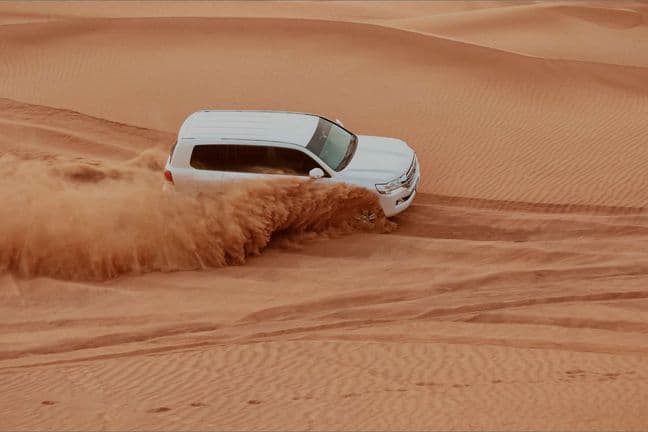
I've done the red dune desert safari in Dubai twice -- once in mid-December when it was 24°C and perfect, and again in April when it was already hitting 35°C by pickup time. Both trips ran about 6 hours total, and here's what I'd tell someone who's never been.
What actually happens: the full timeline
Your driver picks you up from your hotel between 3:00 and 3:30 PM (or earlier if you're staying in Sharjah or Ajman). Staying on the Sharjah side? Our Sharjah pickup guide explains how the earlier collection works. The drive to the Lahbab desert takes 45-60 minutes depending on traffic. Lahbab is where the red dunes are -- the sand gets its color from iron oxide deposits that are millions of years old, and the dunes here are noticeably steeper than the regular desert areas closer to the city.
Around 4:15 PM, the drivers pull over to deflate the tires. That's when you know it's about to start. If you have motion sickness concerns, check out our dune bashing safety and motion sickness guide before you go.
Dune bashing on red sand: what it's really like
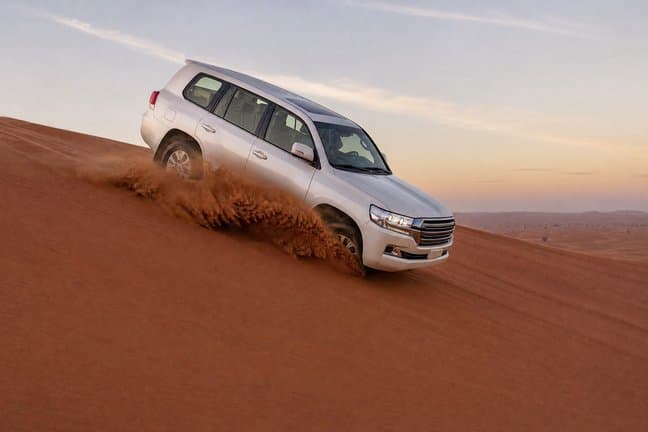
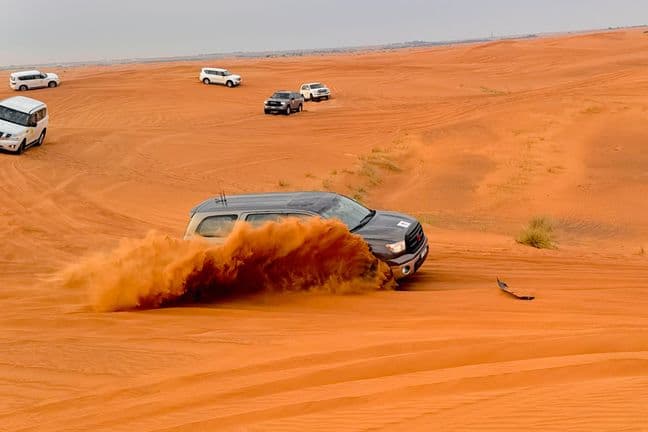
The red dune bashing lasted about 30-45 minutes both times I went. The drivers use Toyota Land Cruisers and they know these dunes well. On my December trip, our driver had been doing this for 11 years. The red dunes at Lahbab are steeper than regular desert areas -- some slopes hit 50-60 degrees -- so the bashing feels more intense than what you'd get on a standard route.
Fair warning: it gets rough. My wife wasn't thrilled during the steeper drops, but our driver checked in with us and adjusted the intensity. If you're prone to car sickness, eat something light 2-3 hours before pickup and sit in the front seat. On my April trip, one person in the vehicle asked to stop about 20 minutes in, and the driver was fine with it.
Sandboarding and camel riding: the honest version
After dune bashing, you stop at a high dune for sandboarding. I'll be straight with you -- it's fun for about 15 minutes. You strap your feet onto a board, slide down, walk back up. The red sand is softer than regular sand so you don't pick up huge speed, which honestly makes it more accessible for beginners. Kids seem to enjoy it more than adults do.
The camel ride is short -- maybe 10-15 minutes in a loop around the camp area. The camels are well looked after and the handlers help you mount and dismount. First time I did it, I wasn't expecting how bumpy it is when the camel stands up. Grab the front handle and lean back. Worth doing once for the photos.
The camp: dinner, shows, and everything in between
You arrive at the desert camp around 5:30-6:00 PM, right around sunset. This is the best part for photos -- the light hitting the red sand is genuinely impressive. At camp, you can get henna done on your hands (free), try on traditional Arabic outfits for photos, and hold a falcon — that last one costs extra.
The live entertainment starts around 7:30-8:00 PM. You get a Tanoura spinning performance (the one with the colorful skirts -- my kids loved it), belly dancing, and a fire show. The Tanoura performer on my December trip was genuinely talented, spinning for 15 minutes straight without stopping.
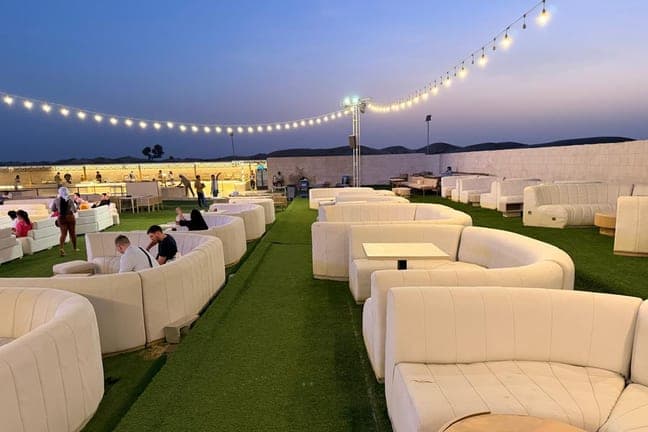
The BBQ dinner is a buffet with grilled chicken, lamb kebabs, hummus, biryani rice, salads, and Arabic bread. Vegetarian options are available but limited -- mostly hummus, salads, and rice. The food is decent camp food, not restaurant quality, but the setting makes up for it. Eating outside under the stars with the desert stretching out behind you is something you won't forget.
Red dune safari vs regular desert safari: what's actually different
People ask this constantly, so here's the breakdown from someone who's done both. The red dunes at Lahbab are steeper and more photogenic. The sand color comes from iron oxide and it photographs better than regular tan desert, especially at sunset. Dune bashing on red sand feels more intense because the slopes are bigger.
The drive is longer though -- about 60 minutes from Downtown Dubai vs 45 minutes for regular safari locations. And the camp experience (dinner, shows, activities) is essentially the same regardless of which dunes you visit. If you're choosing between the two, read our standard vs premium safari comparison -- it covers what you get at each level.
What I'd do differently
On my first trip, I wore sandals. Don't. The sand gets everywhere and it's hot in the afternoon. Closed shoes with socks. Check our desert safari clothing guide for the full packing list.
I also didn't bring a light jacket for the evening. In December, the temperature dropped from 24°C to about 15°C after sunset. The weather management guide covers this in detail, but the short version: always bring a layer, even if it feels warm at pickup.
If you're traveling with teenagers, they'll love the dune bashing and sandboarding. Our guide on desert safari activities for teenagers has age-specific recommendations. For younger kids (ages 3-7), the family safari guide covers what works and what doesn't.
The bottom line
The red dune desert safari is a solid experience. The dune bashing is the highlight -- it's genuinely thrilling and the red sand landscape at Lahbab is worth the longer drive. The camp activities and dinner are pleasant but not life-changing. I'd recommend it to first-time visitors to Dubai, couples, and families with kids over 5.
For the actual booking, we run two packages that cover this route. Our desert safari Dubai package includes the full red dune experience with hotel pickup, dune bashing, all camp activities, and BBQ dinner. If you want VIP seating and a less crowded experience, the premium desert safari upgrades the dining and seating. Both go to Lahbab.
Want something completely different? The self-drive dune buggy lets you drive yourself across the red dunes -- a totally different adrenaline rush from sitting in the passenger seat. Our dune buggy comparison guide breaks down the options.
If you're wondering whether premium is worth the upgrade, our honest price comparison covers what you actually get at each level, and book direct on our site to skip the OTA markup.