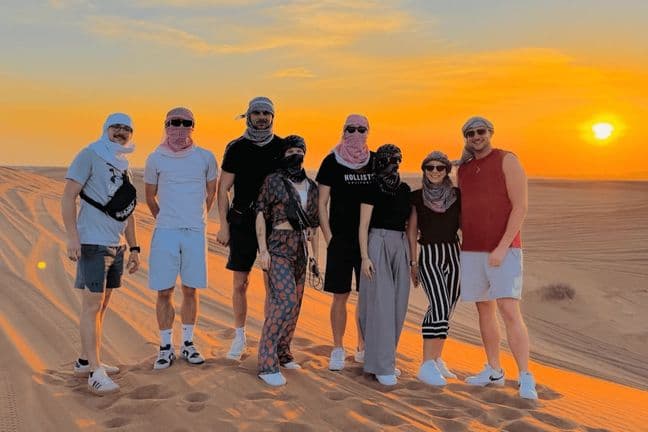
After guiding 200+ desert safari trips, I've seen every clothing mistake possible: flip-flops filled with sand, guests freezing after sunset, white shirts turning orange. Here's what actually works -- and what to avoid.
The desert safari packing list
Before getting into details, here's your quick checklist:
| Item | Why it matters | Common mistake |
|---|---|---|
| Closed shoes (sneakers) | Sand protection, dune climbing | Sandals = sand everywhere |
| Light-colored clothing | Reflects heat | Black absorbs sun, gets hot fast |
| Light jacket or hoodie | 15°C temperature drop after sunset | Forgetting layers, freezing at dinner |
| Sunglasses | Sand glare is intense | Leaving them in the car |
| Sunscreen (SPF 50+) | Desert sun is harsh | Applying once, not reapplying |
| Hair tie (long hair) | Wind during dune bashing | Hair in face for all photos |
| Lip balm | Dry desert air cracks lips fast | Not thinking about it until too late |
| Ziplock bags | Sand gets into phone ports | Losing a phone to sand damage |
What to wear on a desert safari: clothing that works
Skip cotton -- here's why
Cotton absorbs sweat and stays wet. In the 40°C afternoon heat, you'll be soaked. By sunset (when it drops to 25°C), you'll be clammy and cold. Instead, wear moisture-wicking fabric -- any sports shirt works. It dries in minutes and keeps you comfortable through the temperature swing.
Linen is another solid option. It breathes well, dries quickly, and looks better in photos than a gym shirt. Loose-fitting linen pants and a light linen shirt will get you through the afternoon heat without looking like you're headed to the gym.
The footwear rule
I've seen guests in everything from high heels to barefoot. Here's what works:
- Best choice: Sneakers or sports shoes -- protect feet, easy to shake out sand
- Acceptable: Sandals with ankle straps -- some sand gets in, but manageable
- Avoid: Flip-flops (sand everywhere), hiking boots (too hot), anything white (permanently orange after)
One thing TripAdvisor regulars debate: sandals vs sneakers. Sandals are easier to clean, but sneakers give better grip when climbing dunes. If you plan on sandboarding or dune bashing stops where you walk up steep dunes, go with sneakers.
For women: dress code specifics
There's no strict dress code, but practical matters:
- Loose pants or long skirts work best for camel rides (easier to mount)
- Avoid short skirts -- sitting positions can be awkward on traditional floor seating
- Bring a scarf -- useful for sun protection and covering shoulders at camps
- Skip heavy makeup -- it'll melt by hour two. Sunscreen is more useful
For men: keep it simple
Shorts and a t-shirt work fine for the afternoon. But bring long pants or joggers for the evening -- the camp seating is on the ground, and it gets cold. Avoid jeans if you can. They're heavy, don't breathe, and take forever to dry if you sweat through them.
Temperature reality check
This is where most visitors get caught off guard:
| Time | Temperature | What it feels like |
|---|---|---|
| 3:00 PM (pickup) | 38-42°C | Hot. Direct sun feels hotter. |
| 5:00 PM (dune bashing) | 35-38°C | Still hot, but wind helps |
| 6:30 PM (sunset) | 28-32°C | Pleasant, cooling quickly |
| 8:00 PM (dinner) | 23-26°C | Cool -- you'll want that jacket |
| 9:00 PM (heading back) | 20-23°C | Genuinely cold if underdressed |
Winter months (November-February): Evening temperatures can drop to 15-18°C. A proper jacket isn't optional -- it's necessary. I've lent my own jacket to guests more times than I can count during January safaris.
For more on seasonal weather, see our guide to managing desert heat and our best time to visit breakdown.
What activities to expect (and how to prepare)
Dune bashing (30-40 minutes)
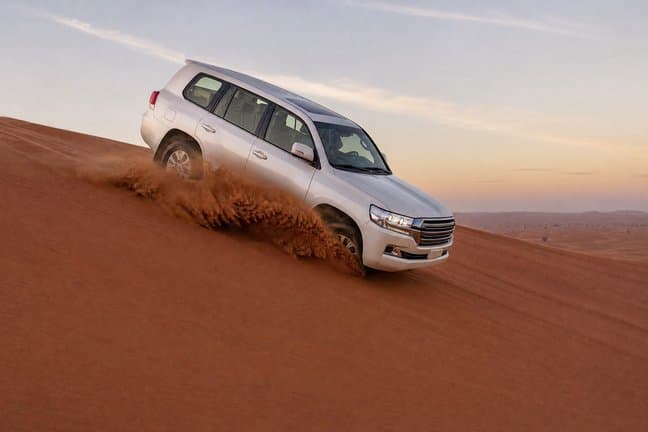
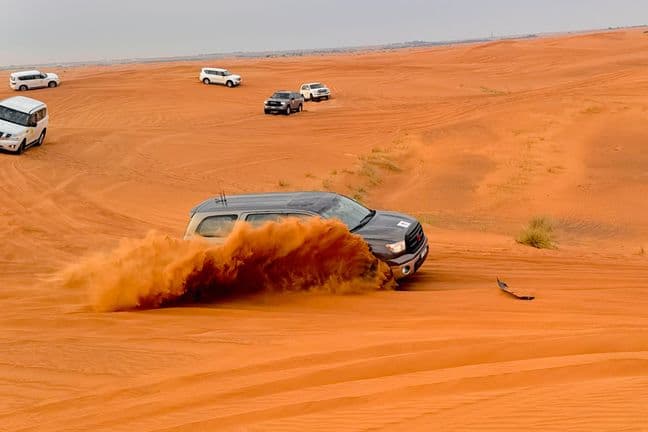
Your driver navigates the red sand dunes in a Land Cruiser. It's intense -- sharp turns, steep drops, quick accelerations. Prepare by:
- Taking motion sickness medication 30 minutes before (Dramamine works)
- Sitting in the front seat if you're prone to nausea
- Eating light beforehand -- heavy meals make it worse
- Telling your driver if you want "gentle" or "thrilling" -- they'll adjust
Want to drive yourself instead? Our self-drive 2-seater dune buggy lets you control the pace. Families can go for the 4-seater family dune buggy instead.
For the full breakdown on what dune bashing feels like, read our red dune bashing guide with safety tips and motion sickness advice.
Sandboarding
Like snowboarding, but slower and sandier. Tips:
- Wax is provided -- use it, or you won't slide
- Sit-down boarding is easier for beginners
- Sand gets everywhere -- zip all pockets closed before you start
More on this activity in our sandboarding guide.
Camel ride (15-20 minutes)
The mounting process is the tricky part -- the camel lurches forward then backward as it stands. Hold the saddle handle firmly. The actual ride is gentle and relaxing. Wear long pants if you can; the saddle can rub against bare legs. For first-timer tips, see our camel riding guide for beginners.
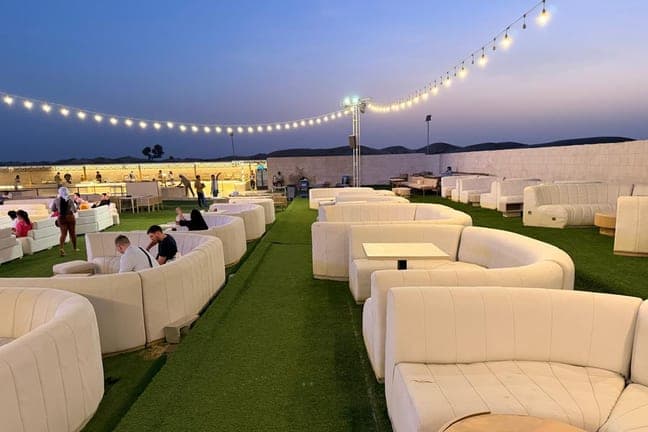
Evening camp: what to know
Entertainment schedule (typical)
- 6:30-7:00 PM: Arrival, welcome drinks (Arabic coffee, dates)
- 7:00-7:30 PM: Henna painting, traditional dress photos
- 7:30-8:30 PM: BBQ dinner buffet opens
- 8:30-9:30 PM: Shows (Tanoura dance, belly dance, fire show)
- 9:30 PM: Departure
For the full rundown on shows and music, see our guide to desert safari entertainment.
Food: what's actually served
Standard BBQ buffet includes:
- Grilled meats: chicken, lamb, beef kebabs
- Rice dishes: biryani, saffron rice
- Salads: hummus, baba ganoush, fattoush, tabbouleh
- Bread: Arabic flatbread, pita
- Desserts: kunafa, baklava, fresh fruit
- Drinks: water, soft drinks, Arabic coffee, tea
Vegetarian/vegan: Always available -- just inform your driver during pickup. For a full menu breakdown, see our desert safari BBQ dinner guide.
Safety tips that actually matter
People search for "dubai desert safari safety tips" a lot, so here's the real advice based on what we've seen go wrong:
- Seatbelt on during dune bashing -- obvious, but some guests unbuckle for photos
- Stay with your group -- the desert looks the same in every direction
- Hydrate before, during, after -- you'll lose more water than you realize
- Protect your phone -- put it in a ziplock bag. Sand damages charging ports and speakers
- Medical conditions: Tell your guide about back problems, pregnancy (not recommended for dune bashing), heart conditions
For the complete safety rundown, read our desert safari safety tips guide.
What to skip (save your money)
Some optional activities aren't worth the extra cost:
- Quad biking at camp: Short rides, overpriced for what you get. If you want a proper quad experience, book a dedicated quad bike tour instead -- longer rides, open desert, better value.
- Professional photos: They charge extra at the camp. Your phone works fine.
- Shisha: Included in most packages -- don't pay extra.
If quad biking interests you, our desert safari with quad bike combo bundles everything together.
Booking the right package
Now that you know what to expect, choose the right experience:
- Standard evening safari: Shared vehicle, all activities included, hotel pickup. Good for most visitors. See our standard desert safari package.
- Premium safari: Better vehicle, VIP seating, longer dune bashing, upgraded dinner. Worth it for special occasions -- see our premium desert safari package.
- Self-drive options: Control your own adventure with a 2-seater dune buggy or 4-seater family buggy.
Not sure which package fits? Our comparison guide breaks down standard vs premium with specific recommendations.
For a complete UAE experience, combine your safari with an Abu Dhabi city tour -- different vibe, equally impressive landmarks.
Frequently asked questions
Can I wear jeans on a desert safari?
You can, but they're not ideal. Jeans are heavy, don't breathe, and take a long time to dry. If it's winter (November-February) and you're only wearing them for the evening, they're fine. In summer, you'll be uncomfortable within an hour.
Is there a dress code for women on desert safaris?
No formal dress code. You don't need to cover up, but practical clothing works better: loose pants or long skirts for camel rides, closed shoes for dune walking, and a scarf if you want extra sun protection. Modest clothing is appreciated but not required at the camp.
What should I wear in winter (November-February)?
Layers. A t-shirt and light pants for the afternoon, plus a proper jacket (not just a hoodie) for the evening. January evenings can drop to 15°C. Bring a scarf or beanie if you get cold easily.
Do I need to bring water?
Most tour operators provide water, but bringing your own bottle is smart. You'll be outside for 6-7 hours, and dehydration sneaks up on you in dry desert air even when it doesn't feel hot.
Should I wear sunscreen if the safari starts in the afternoon?
Yes. The UV index in Dubai stays high until well past 5 PM. Apply SPF 50+ before you leave your hotel, and reapply once during the trip. Don't forget your ears and the back of your neck.
Final checklist before you go
- Closed shoes (sneakers preferred)
- Light-colored, moisture-wicking clothing
- Light jacket or hoodie for evening
- Sunscreen SPF 50+ and sunglasses
- Lip balm (desert air is dry)
- Fully charged phone (bring power bank)
- Ziplock bag for phone protection
- Motion sickness medication (if needed)
- Cash for tips (AED 20-50 for driver is customary)
- Camera with sand-proof case or ziplock bag