I've guided Dubai city tours for years, and the question I get most is: "Can we see both Old and Modern Dubai in one day?" The answer is yes -- but you need to plan it right. Here's the exact itinerary I use, with timings, entry fees, and the spots most tourists miss.
Landmarks this Dubai city tour covers: Dubai Creek and the abra crossing, the Spice and Gold Souks, Al Fahidi Historical Neighbourhood, Dubai Frame, Burj Khalifa, Dubai Mall and Fountain, Palm Jumeirah, and Dubai Marina. That's eight stops spanning both the old and modern sides of the city, and a full run takes about 12 hours (roughly 8 AM to 8:30 PM).
Dubai City Tour: Morning in Old Dubai (8 AM - 12 PM)
Start early -- Old Dubai is best before the heat kicks in. Here's the route that flows naturally without backtracking:
Stop 1: Dubai Creek Abra Ride (8:00 AM)
- What it is: Traditional wooden boat crossing between Bur Dubai and Deira
- Cost: AED 1 per person (yes, one dirham -- it's the cheapest activity in Dubai)
- Time needed: 15-20 minutes
- Tip: Take the abra from Bur Dubai Abra Station to Deira Old Souk Station for the best view of the creek
The abra ride is genuinely one of my favorite parts of Dubai. You're surrounded by dhows (wooden cargo ships), the skyline in the distance, and it costs less than a coffee.
Stop 2: Spice Souk & Gold Souk (8:30 AM - 10:00 AM)
- Where: Deira side, 5-minute walk from the abra station
- Cost: Free to explore (bring cash for purchases)
- Time needed: 60-90 minutes
Spice Souk tips:
- Look for saffron (much cheaper than back home -- around AED 30-50 per gram)
- Frankincense makes an authentic souvenir
- Don't buy the first price -- expect to negotiate 30-40% off
Gold Souk tips:
- Prices are based on daily gold rates plus making charges
- Ask for the "gold rate" first, then negotiate the making charge
- Window shopping is fine -- no pressure to buy
Stop 3: Al Fahidi Historical Neighbourhood (10:15 AM - 11:30 AM)
- Where: Bur Dubai side (take abra back, AED 1)
- Cost: Free to walk around; Dubai Museum AED 3 entry
- Time needed: 60-75 minutes
This is where you see what Dubai looked like before oil money. The wind-tower houses, narrow alleyways, and art galleries are a complete contrast to the skyscrapers you'll see later. The Dubai Museum inside Al Fahidi Fort is worth the AED 3 entry -- it covers Dubai's transformation from fishing village to global city.
If you want to go beyond the main tourist trail, our guide to the top Dubai city tour attractions covers several Old Dubai spots that most visitors walk right past.
Lunch Break & Transit (12 PM - 1:30 PM)
Two options:
- Traditional lunch: Arabian Tea House in Al Fahidi -- traditional Emirati food in a courtyard setting (AED 80-120 per person)
- Quick lunch: Grab shawarma from a street vendor (AED 10-15) and save your appetite for Dubai Mall later
Transit to Modern Dubai takes 20-30 minutes via taxi or metro. The Dubai Metro is efficient and air-conditioned -- Red Line from Al Fahidi to Burj Khalifa/Dubai Mall station.
Dubai City Tour: Afternoon in Modern Dubai (1:30 PM - 7:30 PM)
Stop 4: Dubai Frame (1:30 PM - 2:30 PM)
- Where: Zabeel Park, a short taxi ride from Al Fahidi (10 min)
- Entry: AED 50 per adult, AED 20 for children (ages 3-12)
- Time needed: 45-60 minutes
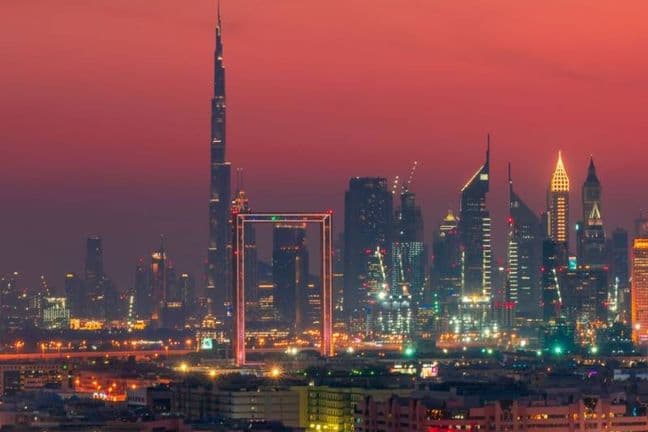
The Dubai Frame is a 150-metre-high structure shaped like a picture frame. From the glass-floored bridge at the top, you get Old Dubai on one side and Modern Dubai on the other -- it's the best way to see the contrast between the two cities you've just explored. On a clear day, you can see all the way to the Palm. Most guided tours now include this stop, and at AED 50 it's less than a third of the Burj Khalifa ticket price.
Stop 5: Burj Khalifa (2:45 PM - 4:15 PM)
- Entry: "At the Top" (Level 124/125) from AED 169 | "At the Top SKY" (Level 148) from AED 399
- Time needed: 90 minutes
- Pro tip: Book online in advance -- walk-up tickets cost more and may not be available
My honest take: Level 124/125 is worth it. Level 148 is nice but not 2x better. The views are incredible either way -- you can see the Palm Jumeirah, World Islands, and the entire city sprawl.
Stop 6: Dubai Mall (4:15 PM - 5:30 PM)
- Cost: Free to explore; individual attractions extra
- Time needed: 75 minutes (could spend a full day, but we're being efficient)
Highlights if you're short on time:
- Dubai Aquarium: Free viewing from the mall; AED 135 for tunnel walk-through
- Dubai Fountain: Viewing platform outside (shows start at 6 PM)
- Ice Rink: Olympic-sized rink in the middle of the mall
Stop 7: Palm Jumeirah (5:45 PM - 7:00 PM)
- Getting there: Taxi from Dubai Mall (15-20 min) or Palm Monorail from Gateway Station
- Monorail cost: AED 30 round trip
- Time needed: 60-75 minutes
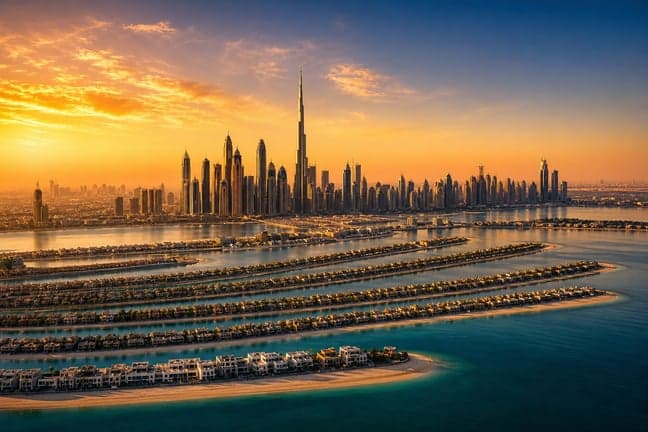
The monorail ride itself is worth it -- you see the Palm from above, which really shows the palm tree shape. At Atlantis, walk through the resort lobby (free) to see the giant aquarium and architecture.
Stop 8: Dubai Marina (7:00 PM - 8:30 PM)
- Getting there: Taxi from Palm (10 min) or monorail + tram connection
- Cost: Free to walk around
- Time needed: 60-90 minutes
Dubai Marina at sunset is spectacular. Walk along the Marina Walk promenade, watch the yachts, and pick a waterfront restaurant for dinner. This is my favorite part of Modern Dubai -- it feels alive in the evenings.
Evening Options
After your city tour, you have two great options for extending your Dubai experience:
- Return to Burj Khalifa area: Catch the Dubai Fountain show (free, every 30 min from 6 PM)
- Add a desert safari: Our premium desert safari picks up from Dubai hotels around 3-4 PM -- perfect for the next day after your city tour
Combining a city tour with a desert safari is probably the best two-day plan for first-time Dubai visitors.
Dubai City Tour: Practical Tips
Best Time to Do This Tour
- Best months: October to April (comfortable 20-30 degrees C)
- Avoid: June to August (40 degrees C+ makes walking miserable)
- Best day: Friday morning -- souks are busier and more atmospheric
For a detailed month-by-month weather breakdown, check our weather guide for choosing the best time.
What to Wear
- Comfortable walking shoes (you'll cover 8-10 km)
- Modest clothing for souks (shoulders and knees covered)
- Sunscreen and hat for outdoor sections
- Skip cotton -- it absorbs sweat. Go for moisture-wicking fabric instead
For a complete packing guide, see what to wear on Dubai tours.
Total Budget for Self-Guided Tour
| Item | Cost (AED) |
|---|---|
| Abra rides (x2) | 2 |
| Dubai Museum | 3 |
| Dubai Frame | 50 |
| Burj Khalifa (Level 124) | 169 |
| Palm Monorail | 30 |
| Lunch | 50-120 |
| Taxis/Metro | 50-80 |
| Total | AED 354-454 |
Book a Guided Dubai City Tour
If you'd prefer a guided experience with transport included, our private full-day Dubai city tour covers all these locations with an expert guide, air-conditioned vehicle, and hotel pickup from Dubai, Sharjah, or Ajman. It's especially worthwhile if you're traveling with family or prefer not to navigate public transport. Booking direct with us also means you skip the OTA markup.
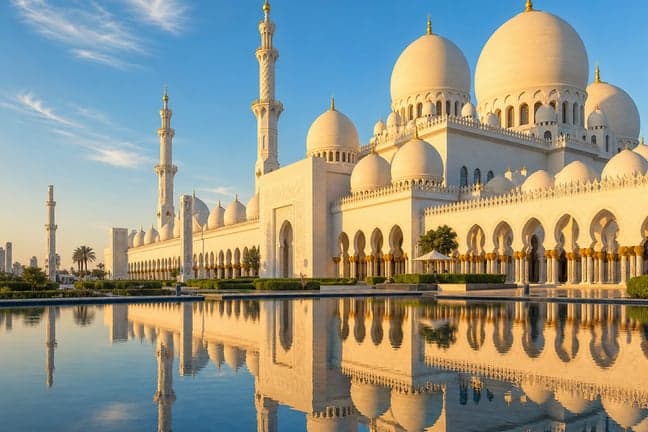
Thinking about visiting Abu Dhabi too? Our Abu Dhabi city tour from Dubai makes a great day trip -- you'll see Sheikh Zayed Mosque, Emirates Palace, and Heritage Village. Many visitors do Dubai one day and Abu Dhabi the next. For a detailed comparison, read our Dubai vs Abu Dhabi city tour guide.
Best time to visit Dubai, month by month
The short version: November to March is the sweet spot. Temperatures sit between 20 and 30 degrees C, humidity is manageable, and you can walk the whole route above without wilting. The trade-off is that everyone else knows this, so hotels are dearer and the landmarks are busier. If you can be flexible, late October or early April give you almost the same weather with thinner crowds -- I've had guests get sunset photos at Burj Khalifa with nobody else in frame in April.
Here's how each month actually feels:
- January -- 15 to 24 degrees C, cool evenings. Pack a light jacket; desert nights genuinely get cold.
- February -- 16 to 25 degrees C, comfortable, and the Dubai Food Festival is on.
- March -- 18 to 28 degrees C, warming up but still easy for walking the souks.
- April -- 22 to 33 degrees C. Do the outdoor stops before 10 AM or after 4 PM.
- May -- 27 to 38 degrees C. Beach mornings and indoor attractions from here on.
- June to August -- 40 degrees C and up, with humidity that makes it feel worse. Doable if you plan around it, and hotel rates drop sharply.
- September -- still hot at 28 to 39 degrees C, but starting to ease.
- October -- 25 to 35 degrees C. Evenings turn pleasant after mid-month, good for the Marina and a dhow dinner.
- November to December -- 17 to 30 degrees C, clear skies, the best touring weather of the year. Book well ahead over Christmas and New Year.
Peak, shoulder, and off-season
Peak (November to March): the best weather and the biggest crowds. Book hotels and popular slots a couple of months out, especially over the Dec 20 to Jan 5 holiday rush.
Shoulder (April, May, October): warm middays but comfortable mornings and evenings, better availability, and lower rates. My personal favourite window.
Off-season (June to September): hot enough that stepping outside feels like opening an oven, but prices are at their lowest and the landmarks are nearly empty. Start early, stay in the air-conditioned vehicle between stops, and you can still do the whole itinerary.
Ramadan and school holidays
In 2026, Ramadan falls roughly from late February to late March (the exact dates depend on the moon sighting). During Ramadan many restaurants close in daylight hours, alcohol service starts after sunset, and the city is quieter by day but comes alive in the evenings -- an Iftar dinner is one of the nicer cultural experiences you can add. Attractions stay open, though hours can be shorter. Dubai also fills up during UK half-terms (February and October), the early-January Russian holidays, and the Christmas-to-New-Year fortnight, so expect higher prices and busier stops then.
Doing this itinerary with kids
This route works with children, but a few stops land better at certain ages, and the order matters more when there are little legs involved.
What works at which age
- Toddlers and young kids (3-7): the abra crossing, the Dubai Aquarium tunnel, and the Dubai Mall ice rink are the easy wins. Keep the souks and Al Fahidi short -- the walking wears them out fast -- and time the day so you finish on the free Dubai Fountain show.
- Tweens (8-12): this is the age Burj Khalifa really clicks. Book a sunset slot so they see the city in daylight, at dusk, and lit up, all in one visit.
- Teenagers (13-17): the Dubai Frame's glass floor and the VR Park inside Dubai Mall usually earn a nod even from the hard-to-impress. The Frame is also less crowded than Burj Khalifa and cheaper.
Why families lean toward a private tour
Dubai isn't a walkable city with kids, and taxis don't carry car seats. A private Dubai city tour smooths out most of the friction: car seats on request, door-to-door pickup so you're not wrangling strollers at metro stations, an air-conditioned vehicle between stops, and a guide who knows where the clean bathrooms and kid-friendly lunch spots are. If someone needs a break, you just take one -- there's no group schedule to keep up with.
One safety note that matters more than crime here: the sun. Kids dehydrate faster than adults and can burn in under 20 minutes at midday, so carry water and take a shaded break every 45 minutes or so on the outdoor stretches.
FAQs: Dubai City Tour
How long does a Dubai city tour last?
A full Old-and-Modern Dubai tour covering all eight stops runs about 12 hours, roughly 8 AM to 8:30 PM. Private guided tours are usually offered as half-day (4-5 hours, one side of the city) or full-day (8-10 hours) options. If you only have a few hours, pick Modern Dubai -- Burj Khalifa, Dubai Mall, and Palm Jumeirah fit comfortably into an afternoon.
Can you do Old and Modern Dubai in one day?
Yes, but it's a full day (roughly 8 AM to 8:30 PM). The itinerary above covers 8 stops across both sides of the city. If you only have half a day, pick one side -- most first-timers prefer Modern Dubai (Burj Khalifa, Dubai Mall, Palm Jumeirah).
Is a Dubai city tour kid-friendly?
It can be, with a few tweaks. Kids tend to love the abra ride, the Dubai Aquarium tunnel, the Dubai Mall ice rink, and the Fountain show. The souks and Al Fahidi involve more walking, so keep those stops short with young children. A private guided tour works best for families since you can set the pace and the air-conditioned vehicle means no waiting in the heat between stops.
Is a guided city tour worth it, or should I go solo?
If you're comfortable with public transport and Google Maps, the self-guided route above works well. A private guided tour makes sense if you're short on time, traveling with elderly relatives or young kids, or want someone to handle the logistics. The guide also gets you past queues at popular stops.
How much does a Dubai city tour cost?
Self-guided: AED 354-454 per person (entry fees, transport, lunch). A private guided tour with vehicle and hotel pickup starts from around AED 350-500 per person depending on group size and inclusions like Burj Khalifa tickets.
What's the best time of year for a Dubai city tour?
November to March. Temperatures sit between 20-30 degrees C, which makes walking through Old Dubai and outdoor sightseeing comfortable. Avoid June through August -- outdoor sections like the souks and Dubai Marina become unbearable at 40 degrees C+.
Does it rain in Dubai?
Rarely. Dubai gets around 25 rainy days a year, mostly between December and March. When it does rain heavily the drainage struggles and traffic slows for a few hours -- as it did in the unusual downpours of January 2020 and April 2024 -- but that's the exception, not the norm.
What's the cheapest time to visit Dubai?
July and August. Hotel rates fall sharply against the December-January peak, and flights are cheaper too because fewer people want to brave the heat. The catch is obvious -- it's very hot outside -- so you'll be planning around air conditioning and early starts.
How many days do families need in Dubai?
Four to five days suits most families: a city tour day using the route above, a desert day, a theme-park or beach day, and a slower day for Dubai Mall and the landmarks, with enough downtime that nobody melts down. Add a day if you're also fitting in Abu Dhabi. Families who cram everything into three days tend to be worn out by day two.
Pairing this with a desert safari
Since this itinerary fills a whole day, it's worth saying what it rules out: you cannot follow it with an evening desert safari. The safari leaves between 2 and 3 PM and this route has you at Palm Jumeirah well after that.
If you want both on the same day, the four-hour half day is the version that fits — Old Dubai and a Downtown drive-through, back by about 1 PM. We wrote up the timing in Dubai city tour and desert safari in one day, or you can book it as a single combo with both pickups matched.