The desert doesn't cool down politely. Once the sun drops behind the Lahbab dunes, the sand loses its heat within the hour, and on a January evening the air can slide toward 15°C before the BBQ buffet even opens. Most people book an evening desert safari Dubai for the dune bashing and the dinner, then get caught off guard by the part nobody advertises: the two or three hours of actual night in the desert before the drive home. That's what this guide is about. What the camp feels like after dark, what you can realistically see in the sky, how late the evening runs, and your options if a 9:30 PM drop-off feels too early to call it a night.
The Camp After Sunset: What You're Actually Doing
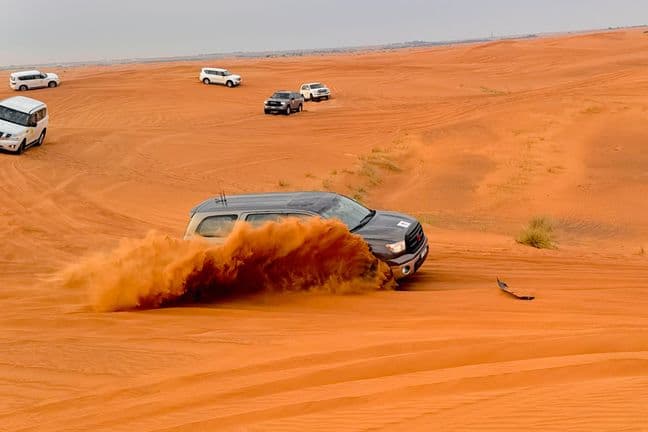
The timing works like this. Pickup from your hotel is around 3:30 PM, dune bashing happens in the last of the daylight, and then there's a stop on a high dune ridge for sunset photos. In winter the sun goes down around 5:30 PM, so you arrive at the camp in that blue half-light just after. We've written up the golden-hour photo stop before dark separately if photography is your main reason for coming.

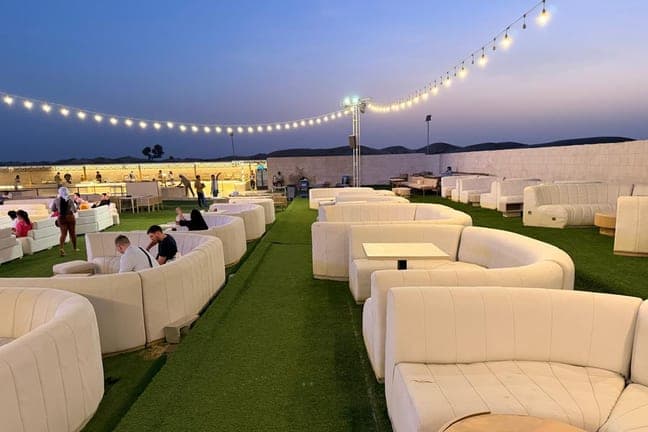
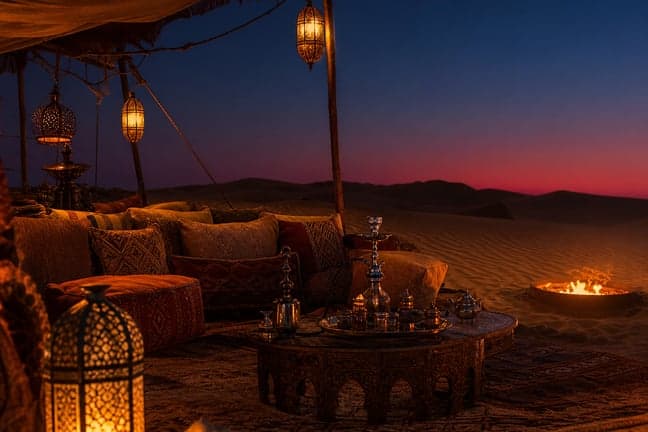
At the camp entrance someone hands you Arabic coffee and fresh dates. That's not a tourist invention, it's how guests are received across the Gulf, and the small cups keep coming if you want them. The camel rides wrap up as the light fades because the camels don't work after dark, so if a ride matters to you, do it first. After that the camp settles into its night rhythm: the henna artists set up their station, the Arabic costume photo corner gets busy, and the shisha lounge fills with smoke that smells like apple and mint.
Dinner is a BBQ buffet with more than 30 dishes, vegetarian and non-vegetarian, and the live shows start around 8 PM. The tanoura, fire and belly dance performances run back to back near the main stage. We won't repeat all of that here because there's a full guide to the tanoura, fire and belly dance shows on this site already, and honestly it covers the performances better than a paragraph ever could.
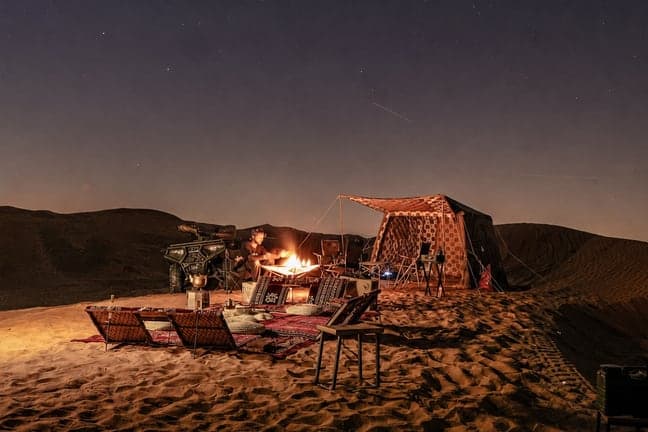
Here's the part that surprises people. Between the buffet and the shows, and especially after the fire show ends, the camp goes quiet in patches. Walk thirty seconds past the last lamp and the noise drops away almost completely. You'll hear the low hum of the generator near the kitchen, maybe a camel somewhere behind the fence, and not much else. Put your hand flat on the sand. It's cold. The same dune that would've burned you at 3 PM has given all its heat back to the sky, which is exactly why desert nights get chilly so fast. There's no cloud and no moisture to hold the warmth in.
Stargazing at Lahbab: Honest Expectations
Straight answer first: yes, you'll see stars, and far more of them than you will from anywhere inside the city. Lahbab is about 45 minutes from Downtown Dubai, well past the last of the streetlights, and on a clear winter night the difference is obvious the moment you look up. Orion, the bright planets, satellites crossing overhead if you watch long enough. People who've only ever seen the sky from Marina or Deira tend to go quiet for a minute.
Now the honest part. Lahbab is dark, but it's not a certified dark-sky reserve. Dubai's glow sits on one horizon like a permanent false dawn, and the camp itself is lit, with string lights, stage lighting and the kitchen area all working against your night vision. So don't come expecting observatory-grade skies, and we're not going to promise you the Milky Way, because whether you catch any hint of it depends on the season, the haze and the moon, and most evenings you won't.
What you can do is stack the odds. After dinner, walk a few dunes back from the camp lights. Even one dune between you and the lamps makes a real difference. Then give your eyes ten to fifteen minutes to adjust, which is harder than it sounds because it means keeping your phone in your pocket. Every time you check a notification, the adjustment starts over. Winter nights are clearer than summer ones, since summer humidity puts a layer of haze between you and everything above it. And a night near the new moon beats a full-moon night for stars, though a full moon over the dunes is its own kind of show, bright enough to throw shadows on the sand.
What will you actually pick out? On a clear winter night, Orion is the easy win, hanging bright over the dunes, and the planets are often the brightest things up there. Summer flattens the view a little, but the major constellations still come through. One practical note on photos: phone cameras mostly disappoint on stars. If you want to try anyway, prop the phone against a sandboard or bury the bottom edge in the sand to keep it still, switch on night mode, and accept that the memory will be better than the picture. Some things are worth watching instead of shooting.
How Late Does the Evening Safari Run?
The evening safari is a six to seven hour trip door to door. Pickup around 3:30 PM, and you're back at your hotel by about 9:30 PM. In practice you leave the camp a little after 9, once the last show finishes, and the drive back to the city takes about 45 minutes. So you get roughly three hours of true darkness in the desert on a winter evening, a bit less in summer when the sun sets later.

The season changes the feel of those hours more than most guests expect. In December and January you'll spend the evening near the shisha lounge with your jacket zipped, and the cold is part of the experience, the way it must have been for anyone who ever crossed this desert before air conditioning existed. In July the night stays warm, the camp feels more relaxed because the day's heat has finally let go, and nobody is in a hurry to get back in the car.
If that's not enough night for you, there are two ways to stay later.
The first is the overnight experience: staying at the camp after the evening crowd leaves, sleeping under the open sky, and waking up for sunrise over the dunes with breakfast at camp before the drive back. The desert at 2 AM is a completely different place from the desert at 8 PM, and the quietest hours are the ones day guests never see. We've covered what's included and whether it's worth it in our overnight desert safari guide.
The second is for people who'd rather drive than sit. Our evening dune buggy tour guide covers the self-drive option, where you take a Polaris RZR over the dunes while the light drops, then join the camp for dinner and the shows afterwards. Same evening window, much higher pulse rate.
What to Bring for the Desert After Dark
Short list, because you genuinely don't need much:
- A light jacket or hoodie from November to February. The camp is open-air, and 15°C out there feels colder than 15°C in the city because there's nothing to block the breeze coming off the dunes. Guests laugh at this advice in the hotel lobby and stop laughing around 8 PM.
- Closed shoes. Sandals are fine in the camp itself, but if you plan to walk behind the dunes for stars, cold sand gets everywhere and sneakers make the climb easier in the dark.
- A charged phone. Not for photos of the sky, which phone cameras mostly fail at anyway, but the torch is useful for the walk back to camp. Just keep it off while your eyes are adjusting.
That's it. Water, soft drinks, tea and coffee are unlimited at the camp, dinner is included, and the seating is sorted. You're not camping, you're being hosted.
Frequently Asked Questions
Can you see stars on a desert safari?
Yes. Lahbab is about 45 minutes outside Dubai, far enough from the city lights that stars are clearly visible on most nights, especially in winter. For the best view, walk a few dunes away from the camp lighting after dinner and let your eyes adjust for ten minutes or so. It's not a dark-sky reserve, and Dubai's glow stays visible on one horizon, but the difference from the city is still dramatic.
How cold does the desert get at night?
In winter (November to February), evening temperatures at the camp commonly drop to around 15°C after sunset, and the open air makes it feel cooler than that. Summer nights stay warm, usually in the high 20s. The sand itself cools fast in every season, so sitting directly on a dune after dark is a chillier experience than people expect. Bring a light jacket for winter evenings.
How late does the evening safari finish?
The evening desert safari drops you back at your hotel around 9:30 PM. The final show at the camp wraps up shortly after 9, and the drive back to the city takes about 45 minutes. Pickup is around 3:30 PM, so the whole trip runs six to seven hours door to door.
Can you spend the whole night in the desert?
Yes. The overnight option extends the evening safari with a night at the camp, sunrise over the dunes and breakfast before the drive back. It's the only way to experience the desert in its quietest hours, after the evening guests leave. Our overnight desert safari guide covers the details, and you can check the live price on the package page when you book.
If the after-dark side of the desert is what you're after, the evening desert safari is where to start. Sunset from a dune ridge, dinner under the open sky, and a couple of hours of real darkness before the drive home. Check the live price on the package page, pick a date near the new moon if the stars matter to you, and pack the jacket. You'll thank us at 8 PM.