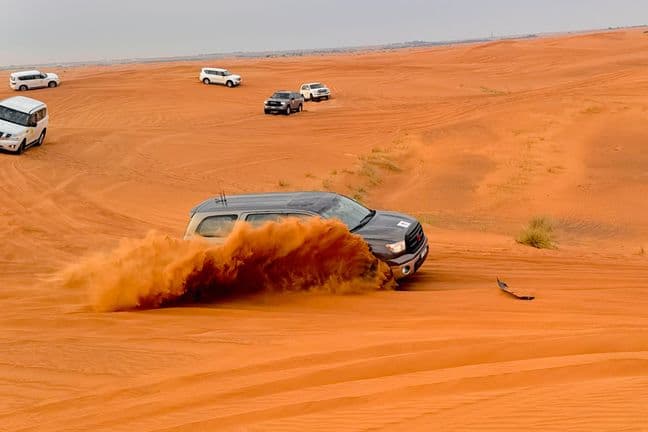
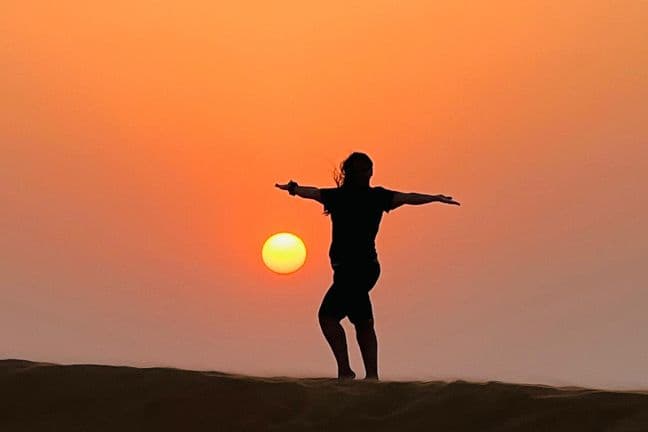
The evening safari is scheduled backwards from one moment: the sun dropping behind the Lahbab dunes. Hotel pickup runs around 3:30 PM precisely so the dune bashing finishes on a high ridge just before sunset, which lands around 5:30 PM in winter. Our evening desert safari Dubai is built around that photo stop, and once you understand the timing, the rest of the evening makes a lot more sense.
We've been running this route since 2018, and our drivers watch the same sunset from the same ridge nearly every evening of the year. Some nights the sky goes deep orange and every photo works. On hazy summer evenings, the sun sometimes dissolves into a soft smear before it ever touches the horizon. This guide covers when the sunset stop actually happens, how it works on the ground, and the photo habits that separate the shots people frame from the ones they delete on the drive home.
What time is sunset on a desert safari?
Around 5:30 PM in winter, and past 7:00 PM at the height of summer. There's no separate "sunset slot" you book. The whole tour is timed around whenever the sun sets that day, which is why the pickup time barely moves through the year but the pace of the afternoon does.
Here's the sequence. Pickup from your hotel is around 3:30 PM. The drive out to Lahbab takes about 45 minutes from central Dubai. At the desert entry point the drivers deflate the tyres for sand driving, then you get 25 to 30 minutes of dune bashing, and the run is planned so the final stretch climbs to the sunset viewpoint while the light is still good. Our drivers do this every single evening; they know within a few minutes how long each leg takes in every season.
Month by month, it breaks down roughly like this:
- November to February: sunset falls between about 5:30 and 6:00 PM. Skies are usually clear, the light is crisp, and the temperature drops fast once the sun is gone. Bring a light jacket for after dark.
- March, April, September and October: sunset drifts out to around 6:00 to 6:30 PM. The light is still reliable, though late spring can carry more dust in the air.
- May to August: sunset lands close to 7:00 PM. It's hot and often hazy. You'll still get color in the sky, but the crisp sun-on-the-horizon shot is less of a sure thing.
One thing worth knowing about winter departures: the schedule is tighter. With sunset at 5:30 PM, there's not much slack between arriving at the dunes and losing the light, so the drivers keep things moving. In summer the later sunset gives the afternoon more breathing room, which is the one thing the hot months have going for them.
If you're choosing a travel month around weather and light, our month-by-month timing guide covers each month in detail, so we'll leave the deeper seasonal breakdown to that post.
The golden-hour photo stop: how it actually works
After the dune bashing, the 4x4s pull up below a high dune ridge and everyone climbs out. You get about 10 to 15 minutes up there. That sounds short, and it is, but it sits on the best stretch of light, and the schedule behind it (camp, dinner, three live shows) doesn't leave room for an hour of wandering with a tripod.
The reason this particular desert photographs so well is the sand itself. Lahbab's dunes are coated in iron oxide, which is why they look red-orange at midday and turn a deep copper once the sun gets low. We wrote a separate post on why Lahbab's sand is red if the geology interests you. For photos, the practical effect is simple: low sun on red sand gives you warmth and contrast that the paler dunes closer to the city can't match.
Two honest caveats before you build your whole evening around this stop. The good light is short. From the moment the sun starts sinking toward the haze band, you've got maybe 20 minutes of the light photographers actually chase, and part of that goes on climbing the ridge. And you won't be alone up there. Every 4x4 in the caravan stops at the same viewpoint, so the crest gets busy right when the light peaks. The fix is easy: walk 30 or 40 meters along the ridge, away from the vehicles, and most of the crowd drops out of your frame.
One more thing: you will get dusty. Sitting on the crest for a silhouette shot means sand in your shoes, your pockets, and probably your camera bag. Nobody has ever regretted it, but wear clothes you don't mind shaking out later.
Dress for the stop, not just the drive. Closed-toe shoes or sandals with a back strap make the climb up the soft face of the dune much easier than flip-flops, which mostly stay buried where you left them. From November to February, keep a light jacket in the 4x4; the moment the sun disappears, the temperature drops noticeably, and you'll feel it standing still on an exposed ridge. Sunglasses help too, since you're staring roughly at the sun for a quarter of an hour.
Photo tips from people who are there every evening
Our drivers watch hundreds of guests shoot this same sunset every season, and the difference between the photos people frame and the ones they scroll past usually comes down to a few habits.
Shoot the ridgelines side-lit. Pointing your camera straight into the sun gives you a bright blob and a black foreground. Turn 90 degrees so the low sun rakes across the dunes, and every ripple in the sand throws its own shadow. That's the shot that looks the way the desert felt.
Put people on the crest as silhouettes. Have someone walk the ridge above you while you shoot from below with the sky behind them. Phones handle this well because the exposure locks onto the bright sky and the person goes clean black. Tap the sky on your screen to force it if the phone hesitates.
Your phone is fine. We say this on every package page: you don't need pro gear, and professional photography is a paid extra for people who want it, not a requirement. Modern phones eat golden-hour light for breakfast. Just wipe the lens first; dune bashing coats it in fine dust and every shot comes out foggy until you do.
Turn around. While everyone points west at the sun, the eastern sky behind you often goes soft pink and purple, and the dunes in that direction hold their color longer. Some of the best frames of the evening face away from the sunset.
Don't put the camera away when the sun drops. Ten minutes after sunset, the sky often does its best work, and by then most of the group has climbed back into the 4x4s. You'll have the ridge nearly to yourself for the afterglow.
If riding matters to you as much as the photos, there's a version of the evening where you're moving through that light instead of standing in it. The quad bike combo that rides at golden hour runs its ATV session before sunset, so you're on the quad while the dunes are lit up.
After the sun drops: the rest of the evening
Once the light fades, the caravan drives on to the desert camp for camel rides, sandboarding, henna, and a BBQ buffet dinner, followed by three live shows: Tanoura, a fire show, and belly dance. Drop-off back at your hotel is around 9:30 PM. The camp deserves its own write-up, so we'll keep it at that here.

Sunset vs sunrise safari: not the same trip
A sunrise safari is a separate early-morning tour, not this trip run in reverse. It's cooler and quieter, there's no dinner or live entertainment, and you're back by mid-morning. If you're chasing dawn light instead of dusk, our sunrise desert safari guide covers that trip properly.
Ready to see it from the ridge yourself? Check dates and book the evening safari with the sunset stop included. The photo stop isn't an add-on; it's built into every departure, every day of the year.
Frequently asked questions
What time does the sunset stop happen?
Around 5:30 PM in winter and closer to 7:00 PM in midsummer, right after the dune bashing ends. You'll spend about 10 to 15 minutes at the viewpoint before the group moves on to the camp.
Can I skip dune bashing and still see the sunset?
Yes. If dune bashing isn't for you, whether that's pregnancy, a back problem, or plain motion sickness, tell us when you book and we'll arrange a direct transfer to the camp. You'll watch the sunset from the camp area instead of the high ridge, and you join everything else as normal, from dinner through the last show.
Is sunset better in winter or summer?
Winter, honestly. From November to February the air is clearer, the sun usually reaches the horizon as a sharp disc, and standing on the ridge is comfortable. Summer sunsets still bring color, but haze often softens the sun into a glow before it sets, and the ridge is hot. If you're visiting in summer anyway, still go; the red dunes at dusk are worth it either way.
How much does the evening safari cost?
Prices change with the season and the option you pick, so we don't quote fixed numbers in blog posts. The live desert safari Dubai price page shows current rates for every package side by side, pulled straight from our booking system.