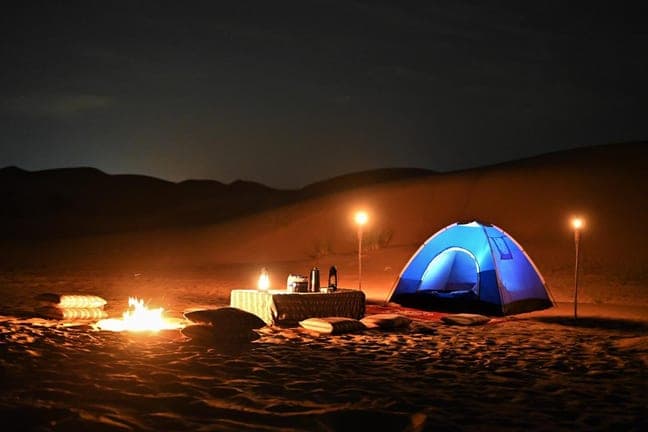
Most desert safaris in Dubai wrap up by 9pm. You get picked up around 3 or 4 in the afternoon, drive out to the dunes, do some bashing, eat dinner at a camp, watch a belly dance performance, and head back to your hotel before the night really settles in. It's a solid experience and we run those trips every day. But some people want more than that. They want to actually be in the desert when everything goes quiet.
That's what an overnight desert safari is. You stay after everyone else leaves. You sleep at the camp, wake up in the dunes, and get to see a side of the desert that 95% of tourists never do. Is it for everyone? No. Is it worth it if you've got the time and the curiosity? We think so, and we'll explain exactly why in this guide.
What Is an Overnight Desert Safari Dubai?
An overnight desert safari is essentially an extended version of the standard evening desert safari. Instead of heading home after dinner and entertainment, you stay at the camp through the night and into the next morning.

Here's how the timeline typically works:
- 3:30 - 4:00 PM — Hotel pickup in a 4x4 Land Cruiser
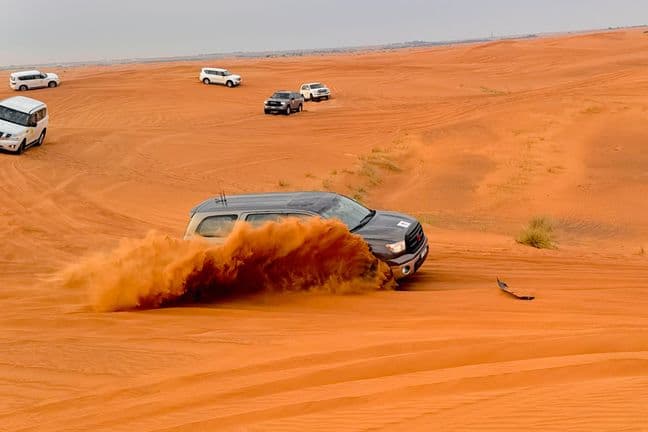
- 4:30 - 5:30 PM — Dune bashing session (about 30-45 minutes of actual driving)
- 5:30 - 6:15 PM — Arrive at camp, get settled, try sandboarding or a camel ride
- 6:30 - 7:00 PM — Sunset. This is when the camp looks its best and the light turns everything orange
- 7:00 - 8:30 PM — BBQ dinner buffet and entertainment (belly dance, tanoura show, fire performance)
- 9:00 PM onwards — Evening safari guests leave. This is when things change.
- 9:30 PM - 6:00 AM — Overnight period. Stargazing, shisha, quiet time at camp
- 6:00 - 6:30 AM — Sunrise over the dunes
- 7:00 - 8:00 AM — Breakfast, optional morning camel ride
- 8:00 - 9:00 AM — Transfer back to your hotel
So you're looking at roughly 16 to 17 hours total, from pickup to drop-off. Compare that to 6 hours for a regular evening safari. The difference isn't just duration, though. It's what happens after 9pm when the camp empties out and the desert gets genuinely quiet.
What's Included in Overnight Desert Safari Dubai?
Inclusions vary by operator and price tier, but a well-run overnight safari typically covers:

Transport and Activities
- Hotel pickup and drop-off in a shared or private 4x4 (Toyota Land Cruiser is the standard vehicle out here)
- Dune bashing — 30 to 45 minutes of driving through the Al Lahbab or Margham red dunes
- Sandboarding — boards provided at camp, no experience needed
- Camel ride — short ride around the camp area, usually 10-15 minutes. Some operators offer a longer morning ride at sunrise
Food and Drink
- BBQ dinner buffet — grilled chicken, lamb, kebabs, hummus, tabbouleh, rice, salads. Vegetarian options always available. The food is decent camp cooking, not fine dining, but there's plenty of it
- Soft drinks, water, Arabic coffee, tea throughout the evening
- Breakfast — simpler than dinner. Bread, cheese, jam, eggs, tea, coffee. Some premium camps do a fuller spread
Entertainment
- Belly dance performance — runs about 15-20 minutes
- Tanoura (whirling dervish) show — the spinning skirt performance, genuinely impressive to watch
- Fire show — not every camp has this, but most overnight ones do
- Henna painting — available at camp, usually included
- Shisha — flavored tobacco pipes set up around the seating area
Overnight Sleeping
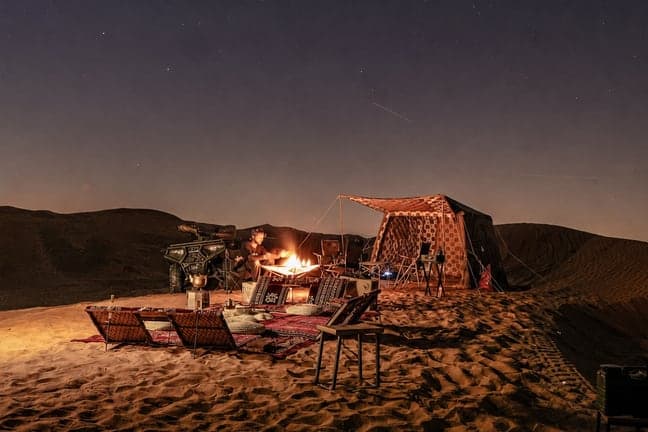
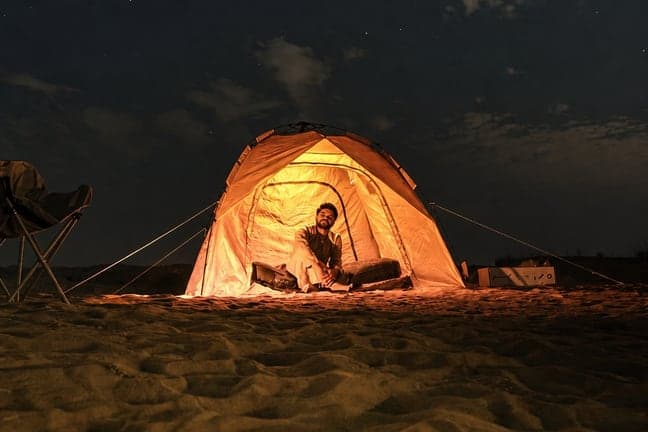
- Bedouin-style tents with mattresses, blankets, and pillows. Let's be honest: these are tourist camp tents styled to look traditional. They've got rugs and cushions and low lighting. They're comfortable enough, but don't expect a hotel room
- Open-air sleeping option — some camps lay out mattresses directly on the sand for people who'd rather sleep under the stars. Between October and April, the temperatures make this very doable
- Basic bathroom facilities — portable or semi-permanent toilets at camp. Running water for washing up
One thing to know: there's generally no WiFi at the camp, and phone charging options are limited. A few camps have a shared power strip or two, but bring a portable battery if you'll need your phone in the morning. We tell our guests to treat it as a chance to disconnect for a night.

Overnight Desert Safari Dubai Price
An overnight desert safari in Dubai typically costs AED 500–800 per person for a shared camp, and AED 800–1,500 for a private setup — that covers dune bashing, BBQ dinner, the live shows, your tent and bedding, breakfast, and hotel transfers both ways. Our own overnight desert safari Dubai package shows live pricing for the shared and private camp. The live overnight desert safari Dubai cost sits on the same rate card as the evening tickets. Here's how the market breaks down:
Standard Overnight Safari
AED 500 - 800 per person
This gets you everything listed above: shared 4x4, dune bashing, dinner, entertainment, overnight tent sleeping, breakfast, and return transfer. The camp will be a larger commercial setup with other groups present. It's the most popular option and honestly covers everything most people want.
Premium / Luxury Overnight Safari
AED 800 - 1,500 per person
At this level you're looking at private vehicle transfers, smaller or exclusive camps, better bedding setups, upgraded food (think grilled seafood, dessert stations), and sometimes extras like a private sunrise camel trek or falconry demonstration. Our premium desert safari package is worth looking at if you want a more polished version of the experience.
What Affects the Price
- Private vs shared vehicle — a private 4x4 typically adds AED 300-800 to the total, depending on the operator. How we run that add-on is on private desert safari Dubai.
- Camp quality — higher-end camps with better tents and food cost more to operate
- Season — peak tourist season (November through March) sometimes pushes prices up 10-15%
- Group size — families and groups of 4+ often get better per-person rates
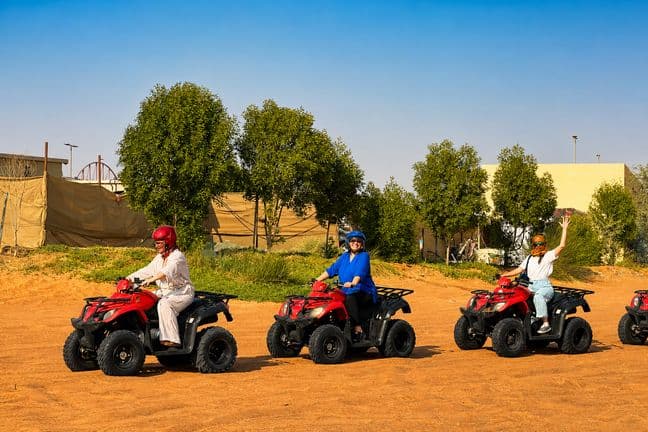
- Add-ons — a last-minute quad or buggy at camp is extra and not guaranteed. If you already know you want a reserved ATV slot overnight, book the overnight desert safari with quad bike instead of treating the ride as an add-on
A good shared-camp overnight sits in the AED 500-800 range — that covers everything most people want from the night. The AED 1,000+ bracket is private-camp territory: your own tent and dining area away from other guests, which is worth it for couples and special occasions but unnecessary for a first visit.
Overnight Safari vs Evening Safari — Which Is Better?
This is the question we get asked most. The honest answer is: it depends on what you're after and how much time you've got in Dubai.
| Feature | Evening Safari | Overnight Safari |
|---|---|---|
| Duration | 6 - 7 hours | ~16 hours (afternoon to next morning) |
| Dune bashing | Yes | Yes |
| Dinner | Yes (BBQ buffet) | Yes (BBQ buffet + breakfast) |
| Entertainment | Yes | Yes |
| Sleep in the desert | No | Yes (tent or open-air) |
| Sunrise experience | No | Yes |
| Stargazing | Brief (you leave by 9pm) | Full night sky, darkest around 2-3am |
| Price range | AED 100 - 200 per person | AED 500 - 800 per person |
| Best for | Short trips, families with young kids, first-timers | Couples, photographers, adventure seekers, repeat visitors |
| Back at hotel | By 9:00 - 9:30 PM | By 9:00 AM next day |
If you're in Dubai for just two or three days and have a packed schedule, the evening desert safari gives you all the highlights without eating into the next day. It's our most-booked trip for a reason.
But if you've got the time, the overnight version adds something the evening can't: silence. Around 10pm, after the last evening-only group drives away, the camp goes quiet. You can hear the wind moving sand. The stars come out properly because you're 50+ kilometers from the city lights. At 6am, you watch the sun come up over empty dunes while drinking Arabic coffee. That part isn't something we can replicate on a 6-hour trip.
Is Overnight Desert Safari Dubai Worth It?
We run these trips regularly, so we'll give you a straight answer based on what we've seen from our guests.
It's worth it if:
- You've got at least 3 nights in Dubai. Spending one night in the desert when you only have two nights total in the city doesn't make sense. But with 3+ nights, you can comfortably fit it in without missing the malls, Burj Khalifa, or the marina
- You're a photographer. Desert sunrise light between 6:00 and 6:45am is genuinely special. The dunes catch this warm, low-angle light that you can't get any other time. Several guests have told us their best photos from their entire Dubai trip came from that 45-minute window
- You're a couple or on a honeymoon. The quiet evening at camp after the crowds leave, sleeping under the stars, waking up to sunrise together, it makes for a memorable night. We've had couples book this specifically as part of a proposal plan
- You want something beyond the standard tourist loop. If you've already done the evening safari on a previous visit, the overnight adds enough new elements to make it feel like a different experience
- Your kids are old enough (8+). Younger children tend to get restless at camp after 9pm. Older kids usually think sleeping in the desert is the coolest thing they've done in Dubai
Skip it if:
- You're on a tight budget. At 2-3 times the price of an evening safari, the overnight is a bigger investment. If budget is a concern, the evening trip covers 80% of the experience at a lower cost
- You have limited time in Dubai. One or two nights in the city? Do the evening safari instead so you don't lose a full morning
- You need proper bathroom facilities and air conditioning. Camp facilities are basic. There are toilets and washing areas, but it's not a glamping resort. If roughing it a little bit isn't your thing, this might frustrate you
- You're a very light sleeper. Between the open-air setup, the occasional breeze flapping tent fabric, and early-morning light, some people don't sleep great. It's part of the experience, but if poor sleep ruins your next day, factor that in
Tips for Overnight Desert Safari Dubai
We've been running these trips long enough to know what makes the difference between a great night and a frustrating one. Here's what we tell every guest before they go.

What to Pack
- A light jacket or hoodie. This is the one people forget most. From October through April, nighttime desert temperatures drop to 15-20 degrees Celsius. During the day it's warm, but by 2am you'll want a layer. From May through September, nights stay warmer (around 30 degrees Celsius) so you won't need one
- Portable phone charger. Charging at camp is limited. If you want your phone for sunrise photos at 6am, bring a battery pack
- Comfortable clothes you don't mind getting sandy. You'll be sitting on rugs, walking on sand, and sleeping in a tent. Leave the white linen at the hotel
- Sunscreen and sunglasses for the morning. The ride back is in daylight and the desert sun hits hard even at 8am
- A small bag or backpack. Don't bring a suitcase. You need somewhere to put your jacket, phone charger, and maybe a change of shirt for the morning
What NOT to Pack
- Valuables. Leave expensive jewelry and watches at the hotel safe. Sand gets everywhere
- Heavy luggage. There's limited space in the vehicle and at camp
- Expectations of luxury. Unless you've booked a premium option, this is comfortable camping, not a five-star experience
Practical Tips
- Bug repellent: Not essential in the dunes (there aren't many mosquitoes in open sand), but it doesn't hurt to have some, especially near camp lighting at night
- Camera settings: If you're into astrophotography, the desert offers some of the darkest skies near Dubai. A tripod and a phone or camera with manual mode will get you decent star shots around 2-3am
- Hydrate during the day. The evening buffet includes unlimited water and soft drinks, but you'll be in the desert heat for the first few hours
- Use the bathroom before bed. Walking to the camp facilities at 3am in the dark and sand isn't fun. Just handle it before you settle in
For more guidance on planning around weather and seasons, check our guide to the best time for a desert safari in Dubai. Timing matters more for overnights than for evening trips because you're exposed to the full temperature cycle.
What Does a Night in the Dubai Desert Actually Feel Like?
We want to give you an honest picture because the marketing photos online can be misleading.

The camp is a commercial tourist camp. It's got a central seating area with cushions and low tables, a buffet section, a performance area, and surrounding tents. During the evening portion, it'll be busy with 40-80 guests from different operators. There's music, performers, the smell of grilled meat, and a lot of photo-taking. It's fun, but it's not solitude.
Then around 9 to 9:30pm, the evening-only guests start leaving in convoys of Land Cruisers. Over the next 30 minutes, the camp population drops from maybe 60 people to 6-10 overnight guests. Staff dim the lights. The music stops. And suddenly you can hear the desert.
That transition is the part that catches people off guard. You go from tourist camp to something that actually feels remote in about 20 minutes. The stars are legitimately impressive. Dubai has a lot of light pollution, but the camps are far enough out (45-60 minutes from the city) that you get a real night sky. On a clear night between November and February, you'll see more stars than you probably have in years, especially if you live in a city. We've written a separate piece on what the Dubai desert is like at night, covering the stargazing, the camp after dark, and the things that only happen once the sun's gone.
Sleeping is... fine. It's not your hotel bed. The mattresses are basic, the blankets are adequate, and there's sand. You'll find sand in places you didn't expect. But most of our guests say they slept well enough, and the ones who didn't still say the sunrise made it worth it.
The morning is the highlight for a lot of people. The alarm goes off at 5:45am (or staff gently wake you), and you step out of your tent into cool desert air as the sky shifts from dark blue to pink to gold. Breakfast is simple, the camp is quiet, and for about an hour you've got dunes and space and nobody rushing you. Some guests take a camel ride. Others just sit with coffee and watch the light change.
By 8am you're back in the Land Cruiser heading to Dubai, and by 9am you're at your hotel. Most people shower, nap for an hour, and then carry on with their day.
How to Book Overnight Desert Safari Dubai
Most tour operators in Dubai offer some version of an overnight desert safari, but quality varies a lot. Here's what to look for when booking:
What to Check Before Booking
- Camp specifics: Ask which camp they use and whether overnight guests get a separate area from evening guests. Some operators just let you sleep in the same communal area, which isn't ideal
- Vehicle arrangement: Shared 4x4 (6 passengers) or private? Private is worth the upgrade if your budget allows it
- Breakfast included? Some budget operators skip breakfast, which is annoying when you're stuck at camp until the driver returns
- Reviews: Look specifically for reviews that mention the overnight portion, not just the evening activities
- Cancellation policy: Weather can delay or cancel desert trips. Know what happens if that occurs
Book With Us
We run desert safaris daily with experienced drivers who know the dunes well. Our premium desert safari package is our closest standard offering, and you can book our overnight desert safari online — for groups, couples, or families who want the full overnight experience.
If you're not sure whether the overnight is right for you, our standard desert safari covers all the core activities (dune bashing, dinner, entertainment) in a single evening. You can always add the overnight component later if you decide you want it. Want the night and a reserved quad? That is the overnight + quad combo — pickup included, 30 or 60 minutes, no licence. The evening-only ATV version is desert safari with quad bike.
Overnight spots — including the private camp setup — can now be booked online. We can arrange private camps, specific tent setups, and extras like sunrise photography sessions or extended camel treks based on what you're looking for.
Frequently Asked Questions
Can you sleep in the desert in Dubai overnight?
Yes. Overnight desert safaris include sleeping at a camp in the desert, either inside Bedouin-style tents with mattresses, blankets, and pillows, or on mattresses set up outside under the open sky. Staff remain at the camp through the night, and basic bathroom facilities are available. The camps are located in designated desert safari areas about 45-60 minutes from the city. It's a tourist camp setup rather than wild camping, but you're sleeping in actual desert dunes with nothing but sand and sky around you.
How cold does it get in the Dubai desert at night?
It depends heavily on the season. From November through March, nighttime temperatures in the desert drop to around 15-20 degrees Celsius (59-68 degrees Fahrenheit). That's noticeably cool, especially if you're sleeping outdoors, so bring a jacket or warm layer. In December and January, it can occasionally dip to 12-13 degrees Celsius. From May through September, nights stay warm at around 28-35 degrees Celsius, so heat is more of an issue than cold. October and April are the sweet spot: warm days, comfortable nights, and the best conditions for sleeping outdoors.
Is overnight desert safari safe in Dubai?
Yes. Licensed tour operators maintain staffed camp facilities throughout the night, with security, first aid supplies, and communication equipment on-site. The camps are in regulated desert areas that operators use daily, and drivers know the routes well. That said, use common sense: follow your guide's instructions during dune bashing, stay near the camp at night (it's easy to get disoriented in open dunes in the dark), and let staff know if you have any medical conditions. We've run thousands of overnight trips without incident. The biggest risk is honestly sunburn on the morning ride back, not safety at camp. If you're interested, check out our guide on sunrise desert safari dubai.