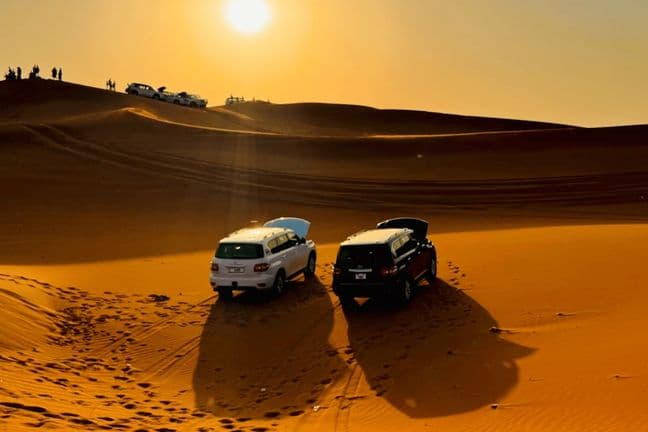
A Dubai desert safari is safe. I'll be direct about that because it's the first thing people ask. Licensed operators in Dubai follow strict regulations set by the Department of Economy and Tourism (DET), vehicles get inspected daily, and the drivers go through certified training before they're allowed to take passengers into the dunes.
That said, "safe" doesn't mean "risk-free for everyone." There are real situations where you should skip certain activities or modify your experience. Here's what you actually need to know before you go.
Who should not do dune bashing
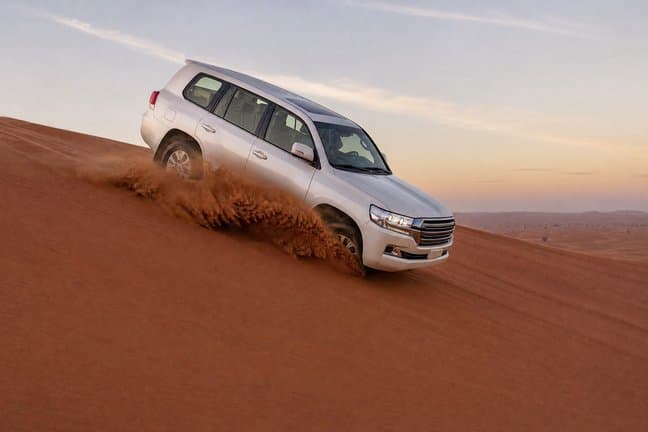
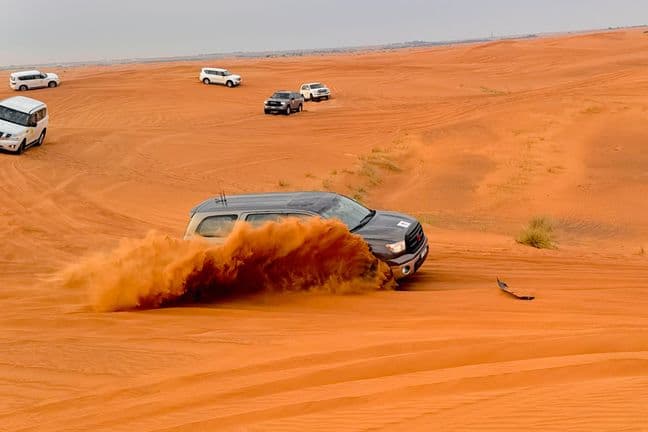
Dune bashing is the part people worry about most — and for good reason. You're in a Toyota Land Cruiser going 60-80 km/h over steep sand dunes, with sharp turns and sudden drops. It's controlled, but it's intense.
Skip dune bashing if you have:
- Back or neck injuries — the jolting motion puts real pressure on your spine. If you have a slipped disc, chronic back pain, or a recent neck injury, this will make it worse.
- Heart conditions — the adrenaline spike and sudden movements aren't suitable for people with serious cardiovascular issues.
- Pregnancy — all reputable operators will refuse to take pregnant women on dune bashing. The sudden impacts and G-forces make it unsafe during pregnancy. This isn't negotiable.
- Severe motion sickness — the constant rolling and tilting over dunes triggers nausea in about 1 in 5 people. If car rides on curvy roads bother you, dune bashing will be significantly worse.
- Recent surgery or fractures — wait until your doctor clears you for high-impact activities.
Here's what most people don't realize: you can still do a desert safari without dune bashing. Tell your operator when you book, and they'll seat you in a vehicle that drives to the camp on normal roads. You'll still get the camel ride, sandboarding, BBQ dinner, live shows — everything except the off-road driving.
The seatbelt rule every driver enforces
Before dune bashing starts, your driver will stop and check every seatbelt in the vehicle. They won't drive into the dunes until everyone is buckled. This isn't just policy — it's the law. Dubai Police can fine operators whose passengers ride unbuckled off-road.
A few things people forget:
- Keep your seatbelt on for the entire ride, not just the start. Some guests unbuckle when the vehicle slows down between dunes. Don't.
- Hold the grab handle above your door with one hand. Your phone or camera can wait.
- Don't brace your feet against the seat in front of you — that position is worse for your knees during sudden stops.
What to wear for safety (not just comfort)
Most advice focuses on comfort, but some clothing choices are genuine safety issues:
Closed-toe shoes. Sand gets hot enough to burn bare feet in summer (the surface can reach 70°C by midday). Even in winter, you need grip for walking on dunes and getting in and out of vehicles. Sandals and flip-flops slide on sand. Sneakers or hiking shoes work best.
Long sleeves aren't just for sun protection. If you're sandboarding, you'll fall. Sand at speed leaves friction burns on bare skin. A light long-sleeve top prevents this. Check our full guide on what to wear for desert safari for a detailed packing list.
Sunglasses with a strap. Wind blows sand into your eyes, especially during dune bashing when the windows might be open. A strap prevents losing them on the dunes.
SPF 50+ sunscreen. UV levels in the UAE desert are extreme, even on overcast days. Apply 30 minutes before your trip and reapply after sweating. Our blog on managing the desert heat covers this in more detail.
Hydration: the mistake most tourists make
Everyone knows they should drink water in the desert. What they actually do is drink a bottle right before the trip and assume that's enough.
Desert temperatures range from 25°C in winter evenings to 45°C in summer. You lose moisture faster than you realize because the dry air evaporates sweat before you notice it. By the time you feel thirsty, you're already mildly dehydrated.
What actually works:
- Start hydrating in the morning, hours before your safari. Two liters spread across the day before a 4 PM pickup beats chugging water at 3:30.
- Carry your own water bottle even though operators provide water. Their supply sits in the vehicle during dune bashing — not always accessible when you want it.
- Avoid alcohol before and during the safari. The BBQ dinner camps serve drinks, but alcohol dehydrates you faster in the heat. If you're going to drink, match each glass with a full glass of water.
- Watch for signs of heat exhaustion: headache, dizziness, nausea, or confusion. If someone in your group shows these symptoms, move them to shade, give them water, and tell your guide immediately.
How to pick a safe operator (and what to avoid)
Dubai's tourism authority requires desert safari operators to be DET-licensed. Licensed operators maintain their vehicles, train their drivers, and carry insurance that covers passengers. Unlicensed ones cut all three corners.
Red flags when booking:
- Price dramatically below average. If everyone charges AED 150-350 and someone offers AED 30, the savings are coming from somewhere — usually vehicle maintenance and insurance.
- No reviews or only generic 5-star reviews. Check Google Reviews and TripAdvisor for specific mentions of safety, vehicle condition, and driver skill.
- No pickup from your hotel. Legitimate operators include hotel transfers. If they're asking you to meet at a random desert location, that's a warning sign.
- Refusing to answer questions about safety procedures. Good operators are happy to explain their safety measures because they actually have them.
Our Premium Desert Safari runs with DET-licensed drivers, daily vehicle inspections, and a maximum of 6 guests per Land Cruiser. The blog on how desert safaris are actually planned goes behind the scenes on what responsible operators do before your pickup.
Camel riding safety: the bits most guides skip
Camels look calm, and they usually are. But they're also 600-kg animals that stand up rear-first. That first lurch backward catches every first-timer off guard.
Practical tips:
- Hold the saddle handle with both hands when mounting and dismounting. This is the moment people fall.
- Lean back when the camel stands up (it rises from the back legs first, so you'll pitch forward if you're sitting upright).
- Don't make sudden loud noises. Camels startle, and a startled camel stands up fast.
- Keep small children in your lap, not on a separate camel. Most operators allow kids on their parent's camel for rides under 15 minutes.
Our camel riding first-timer's guide covers this in more detail, including photo tips and what to wear on the ride.
Sandboarding: low risk, one exception
Sandboarding is probably the safest activity on a desert safari. You're sliding down sand at moderate speed. Falls are soft landings. The main risk is sunburn and minor sand friction burns if you're wearing shorts.
The one exception: don't sandboard headfirst on your stomach. Some people try this after seeing it online. At speed, your face hits sand, and sand doesn't forgive your sunglasses or teeth. Sit or stand on the board. That's it.
Evening camp safety: fire shows and open flames
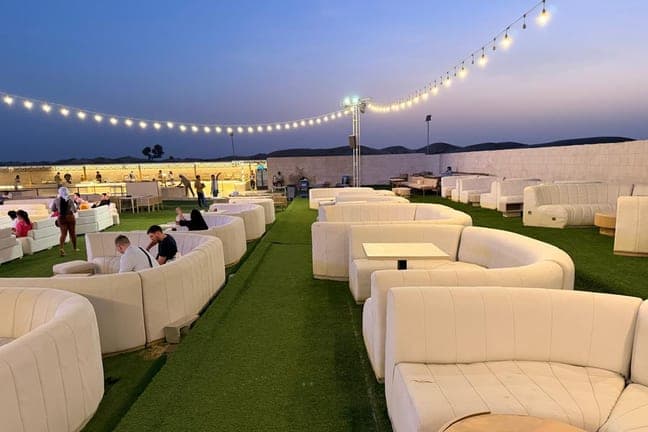
The BBQ dinner camps have open fire pits and fire shows. The performers are trained, but the audience isn't. A few ground rules:
- Stay behind any rope barriers during the fire show. The performers spin flames in calculated arcs — but only if you're at the correct distance.
- Keep children seated during performances. Running kids and spinning fire don't mix.
- Watch your abaya or loose clothing near the fire pit. The evening camp gets chilly, and people crowd around the fire. Synthetic fabrics catch quickly.
The full entertainment and show schedule explains what each performance involves so you know what to expect.
Self-drive buggy safety: different rules apply
If you're doing a 2-seater dune buggy or 4-seater dune buggy instead of (or alongside) a regular safari, the safety rules shift because you're driving.
Buggies have roll cages, seatbelts, and helmets — they're safer than quad bikes in that regard. But you're in control of the vehicle, which means your mistakes are your own.
Key rules:
- Follow the guide vehicle. They know the terrain. That dune that looks smooth might have a steep drop-off on the other side.
- Don't try to overtake other buggies. The guide sets the pace for a reason.
- Goggles on at all times. Sand blowing at speed will temporarily blind you. This isn't optional.
- If your buggy gets stuck, stay in the vehicle. The guide will come to you. Getting out on a dune slope is how rollovers happen.
Read more in our dune buggy safety guide for first-timers.
Emergency procedures: what happens if something goes wrong
Licensed operators carry first aid kits and have radio communication with their base. Desert camps are roughly 45 minutes from the nearest hospital (Rashid Hospital or Latifa Hospital, depending on the route).
If you have a medical condition that might need emergency attention — serious allergies, epilepsy, diabetes that requires insulin — tell your guide before you leave the hotel. They need to know, and they'll carry your medication in an accessible spot during the ride.
Every vehicle in a licensed safari convoy has a satellite phone or radio. If someone in your group has a medical emergency, the guide can call for help immediately. It's not like being stranded alone in the desert.
Bottom line
Desert safaris are one of Dubai's most popular tourist activities, and thousands of people do them every week without incident. The risks are real but manageable — book with a licensed operator, tell them about any medical conditions, wear proper clothes and shoes, stay hydrated, and follow the seatbelt and safety instructions.
If you're healthy and follow the rules, you'll have a great time. If you have a condition that makes high-impact activities risky, you can still enjoy most of the experience — just communicate with your operator when booking.
Ready to book? Our standard desert safari and premium desert safari both run with DET-licensed drivers and daily vehicle inspections. If you want to add a self-drive element, the quad bike option runs with instructor-led groups of 8 or fewer.