What is dune bashing?
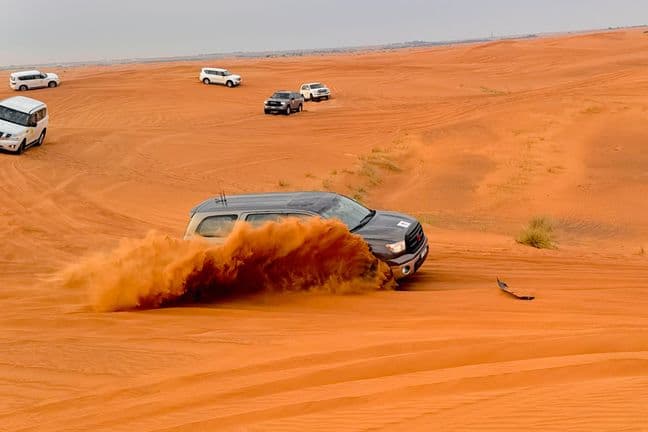
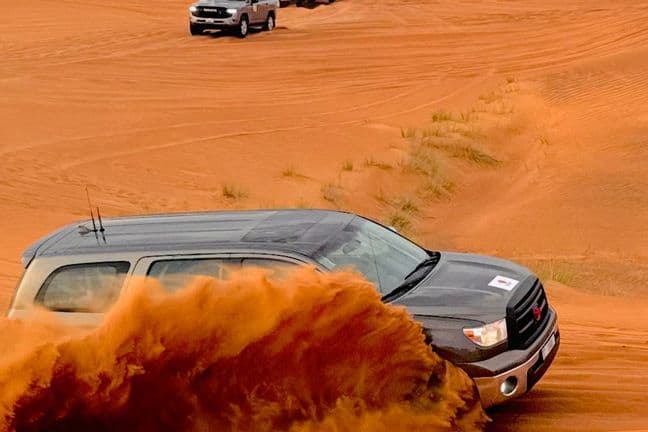
Dune bashing is off-road 4x4 driving across sand dunes. In Dubai it is 25–30 minutes in a Toyota Land Cruiser on the Lahbab red dunes, usually on a desert safari. You don't drive. A licensed driver climbs the faces and slides down the other side while you hold the grab handle.
The name just means that ride. Nothing gets smashed except the sand under the tyres.
You'll feel sharp drops, sideways tilts and sudden slides as the vehicle moves from dune to dune. We use a Land Cruiser 200-series. The driver picks the line; you sit in the passenger seats.

It's part of almost every evening desert safari in Dubai, and it's the activity most people remember afterward. The session lasts 25 to 30 minutes, and it takes place in the Al Lahbab red sand desert, about 45 minutes from central Dubai. You don't drive yourself — a trained professional does all the work while you hold on and try to keep your phone from flying out of your hand.
We've been running these trips for years. The first-timers always say the same thing when they step out: "Can we do that again?"
How Does Dune Bashing Work?
There's more to it than just driving fast over sand. Before the bashing starts, our drivers pull over and partially deflate the tyres — down to about 15 to 18 PSI, compared to the normal 32 to 35 PSI you'd use on tarmac. Lower pressure gives the vehicle a wider tyre footprint and better grip on soft sand. Without this step, the Land Cruiser would dig in and get stuck within minutes.

Each vehicle carries 6 to 7 passengers. The driver runs through a safety briefing before starting: seatbelts on, hold the grab handle, secure your bags, and speak up if you feel sick.
Then it starts. The driver reads the dunes as they go — checking slope angles, sand firmness, and wind direction (which changes the dune shapes daily). They'll hit descents at speed to build momentum for the next climb, then slow at the crest to check what's ahead. The drivers make it look easy, but they're making dozens of micro-decisions every few seconds.
After the session, the driver reinflates the tyres to road pressure before heading to camp or back to the highway. You can't drive on tarmac with 15 PSI tyres without wrecking them.
Where Does Dune Bashing Happen in Dubai?
Most dune bashing in Dubai takes place in the Al Lahbab area, commonly known as the Red Dunes. It's about 45 minutes from Dubai Marina or Downtown, heading southeast toward the Oman border. Map and drive times: where the Dubai desert safari is. The sand gets its reddish-orange colour from iron oxide, and the dunes are tall — some reach 50 metres or more. That combination of height and soft sand makes Al Lahbab the go-to spot for desert safaris.
If you've seen photos of Dubai's red sand dunes, they were almost certainly taken at Al Lahbab. It's where we run the majority of our evening and morning safaris.
Other locations worth knowing about:
- Dubai Desert Conservation Reserve (DDCR) — A protected area used by some premium operators. Less crowded because access is restricted, but you'll pay more.
- Liwa Desert (Abu Dhabi) — Massive mega-dunes, some over 100 metres tall. It's a separate trip — about 3.5 hours from Dubai, usually with an overnight stay. For experienced off-roaders, not standard safari packages.
For most visitors, Al Lahbab is where you'll end up, and it's the best spot. The dunes are the right size for a proper bashing session without being so extreme that it scares everyone in the vehicle.
Is Dune Bashing Safe in Dubai?
Yes. With a professional driver, dune bashing in Dubai is very safe. We get this question constantly, and we understand why — the videos make it look wild. But there's a big difference between what you feel as a passenger and the actual risk involved.

Here's what keeps you safe:
- Licensed drivers — All our drivers are licensed by Dubai's Department of Economy and Tourism (DET) and specifically trained for desert terrain.
- Vehicle maintenance — Our Land Cruisers are inspected regularly. Roll bars and reinforced chassis come standard.
- Mandatory seatbelts — No exceptions. Our drivers won't move until everyone's buckled in.
- Safety briefings — Every session starts with one, even if you've done it before.
For more detailed safety information, check our desert safari safety tips guide.
That said, dune bashing isn't for everyone. You should skip it if:
- You're pregnant
- You have a serious back or neck injury
- You have a severe heart condition
- You're prone to severe motion sickness (taking Dramamine 30 minutes before usually helps)
If you're part of a group where one person can't do the bashing, they can ride in a follow vehicle that takes the dunes at a gentler pace.
What to Expect During Dune Bashing Dubai
Here's what actually happens. Your vehicle will lurch, tilt sideways and slide down sand faces at angles that don't seem possible. This is normal. This is the point. You'll hear people screaming — half from fear, half from excitement. Most passengers grab the overhead handle with one hand and their phone with the other, trying to film while their stomach does flips.

The intensity varies throughout the session. Our drivers mix fast descents with slower ridge runs, so there are moments to catch your breath. The best drivers — and ours have been doing this for 8 to 15 years — know how to build the session so it peaks at the right moments.
If you feel sick, tap the driver's seat or just say something. They'll ease off straight away. Motion sickness hits even experienced passengers sometimes, especially if it's warm and you've had a big lunch.
After the bashing wraps up, your driver heads to the Bedouin-style camp where the rest of the evening safari unfolds — BBQ dinner, live shows, camel rides, henna painting, and everything else included in your desert safari package.
Morning vs Evening Dune Bashing Dubai
You can experience dune bashing at two different times of day, and they're quite different. Here's how they compare:

| Morning | Evening | |
|---|---|---|
| Time | 7:00 – 7:45 AM | 4:00 – 4:45 PM |
| Temperature | Cooler (22–28°C in winter) | Warmer at start, cools at sunset |
| After Bashing | Breakfast and activities | BBQ dinner + live shows |
| Crowd Level | Quieter — fewer vehicles on the dunes | Busier — peak time for safaris |
| Best For | Active travellers, photographers | Full desert safari experience |
The morning option is underrated. Same dunes, same vehicles, same calibre of driver — but fewer vehicles around, so the dunes are less churned up. The sand is firmer in the morning too, which some drivers say makes for sharper runs. If you're a photographer, the morning light on those red dunes is worth the early start. If you want the absolute quietest dunes, ask for a sunrise slot — we can set off so the first run lines up with the early light, before any other operators reach Al Lahbab.
The evening is more popular because it rolls into the full safari — sunset views, campfire dinner, belly dancing, tanoura shows, and stargazing. If you're only doing one safari, the evening gives you more for your money.
Read our full morning desert safari guide if you're considering the early start. Side-by-side with the evening trip: morning vs evening desert safari comparison.
Can You Do Private Dune Bashing in Dubai?
Yes. Private dune bashing means it's just your group in the Land Cruiser — no strangers sharing the cabin. The route, the dunes and the driver are exactly the same as a shared session; the difference is who's sitting next to you and a bit more flexibility on intensity. If your group has nervous riders or young kids, the driver can dial the pace up or down without worrying about anyone else.
Most of our packages can be upgraded to a private vehicle when you book. The upgrade lives on private desert safari Dubai. It's the most-requested upgrade we get, and it makes the most sense for families, couples and small groups who'd rather not be matched with other guests. You can run a private session in the morning, at sunrise, or in the evening — just tell us the time slot you want and we'll quote the upgrade. The premium desert safari includes a private vehicle as standard.
When Is the Best Time of Year for Dune Bashing?
You can go dune bashing year-round in Dubai, but the experience changes a lot with the season. From November through March the weather is cooler (mid-20s to low 30s in the day, dropping to teens at night), and the dunes are at their busiest. April, May and October are warmer but still bearable. June through September is full Dubai summer — daytime highs around 40–45°C — and most operators only run morning bashing or a slightly shorter evening session.
If you're booking outside winter, read our month-by-month desert safari guide first. We've also written a separate summer safari guide with tips for going during the hot months — staying hydrated, choosing the right time slot, and what to wear.
What to Wear for Dune Bashing
You don't need anything special, but a few things make a noticeable difference. Closed-toe shoes (sand gets everywhere), breathable layers, and sunglasses with a strap if you've got them. Skip anything you'd be upset about getting dusty. Long sleeves are useful in winter mornings — temperatures can drop fast once the sun sets.
Our full desert safari outfit guide covers the full kit list, plus what to bring in your bag.
Dune Bashing Dubai Price
Dune bashing isn't sold as a standalone activity in Dubai. It's included in every desert safari package — no extra charge, no separate booking needed.
Cost depends on which package you pick:
- Standard evening desert safari — includes dune bashing, hotel pickup, BBQ dinner, live entertainment, camel riding, sandboarding and more.
- Morning desert safari — includes dune bashing, hotel pickup, sandboarding and a light breakfast.
- Premium desert safari — same dune bashing, but with a private vehicle option, VIP seating at the camp, and a longer dinner menu.
Prices vary by season, group size and package level. Peak months (November through March) run higher; summer is cheaper because demand drops — though the bashing is just as good. Book direct on the package pages for the current desert safari Dubai cost and to save versus resellers.
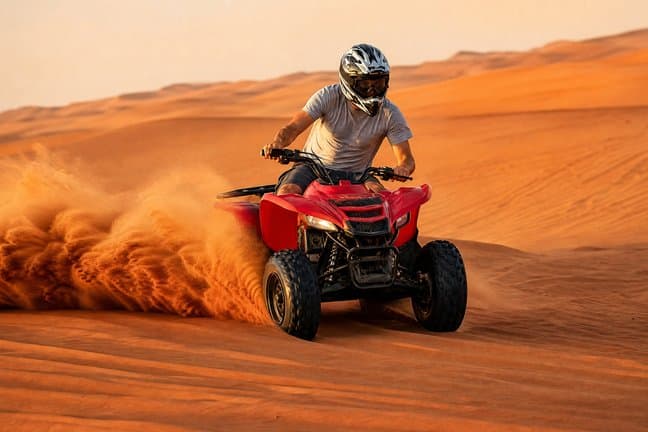
If you want to add quad biking or dune buggy riding alongside your dune bashing, check our desert safari and quad biking combo. That package stacks both experiences back to back, and it's our most popular option for adrenaline seekers — unless you'd rather drive yourself, in which case the 2-seater dune buggy is the one to look at.
Tips for Dune Bashing in Dubai
After thousands of dune bashing sessions, these are the things we wish every guest knew beforehand:
- Don't eat a heavy meal before. A light snack is fine, but a full brunch at 2 PM followed by bashing at 4 PM is a recipe for nausea. Give yourself at least two hours after a big meal.
- Wear your seatbelt the entire time. Not just when it gets intense — the whole time. Our drivers won't start until everyone's buckled up.
- Secure your stuff before the vehicle moves. Bags, sunglasses, phones, water bottles — anything loose will fly around the cabin. We've seen phones hit the ceiling.
- Sit in the back for a wilder ride, middle for less intensity. The rear seats get the most vertical movement on dune drops.
- If you feel sick, tell the driver immediately. Tap their seat or call out. They'll slow down — they've dealt with it hundreds of times and won't judge you.
- Hold the grab handle, not the person next to you. The overhead handles are built for it. Your friend's arm is not.
- Bring a GoPro or use a phone mount. You won't hold a phone steady by hand. A chest-mounted GoPro or suction-cup phone mount on the window gives much better footage.
How to Book Dune Bashing Dubai
Booking is straightforward. Since dune bashing is included in all our desert safari packages, you just need to book the safari that suits your schedule.
Here's the process:
- Choose your preferred time — morning, sunrise or evening safari
- Select your package (standard, premium, or with add-ons like quad biking)
- Pick your date and provide your hotel or accommodation address for pickup
- That's it — dune bashing is automatically included
We handle pickup from your hotel anywhere in Dubai, Sharjah, or Ajman, and return drop-off is included.
Book a desert safari with dune bashing here — or if you want to add quad biking, check our desert safari and quad bike combo package.
Got questions about which package suits your group? Drop us a message — especially if you're travelling with kids, older family members, or mixed groups where not everyone wants the same intensity level.
Frequently Asked Questions
What is dune bashing in Dubai?
Dune bashing is an off-road experience where a skilled 4x4 driver navigates across large sand dunes at speed, creating a rollercoaster-like sensation for passengers. The vehicles used are typically Toyota Land Cruisers with reinforced chassis, and the session runs for 25 to 30 minutes as part of a desert safari. It takes place in the Al Lahbab red dunes area, about 45 minutes from central Dubai.
What does dune bashing mean?
It means driving a 4x4 over sand dunes. In Dubai that's a 25–30 minute Land Cruiser session on the Lahbab red dunes. The word sounds rougher than the ride: you are a passenger, the vehicle climbs and slides, and the sand is what gets "bashed."
Is dune bashing Dubai worth it?
It's the single most popular activity on any desert safari, and it's the part guests talk about most. We've had people come back three or four times just for the bashing. If you enjoy thrill rides or anything with an adrenaline kick, you'll love it. Even people who are nervous beforehand usually step out of the vehicle grinning.
Is dune bashing dangerous?
With a licensed, professional driver, it's very safe. Our vehicles are maintained on a strict schedule, roll bars are standard, and seatbelts are mandatory throughout. The drivers are trained specifically for desert terrain and have years of daily experience on these dunes. The biggest actual risk is motion sickness, not injury.
How long does dune bashing last in Dubai?
Typically 25 to 30 minutes. It's part of a longer desert safari package — the bashing happens at the start, then the vehicle drives to the camp for dinner, shows, and other activities. The full evening safari runs about 6–7 hours. We've broken down how long the whole desert safari takes — pickup to drop-off, hour by hour — in a separate guide.
Can kids go dune bashing in Dubai?
Kids 3 and up can do the bashing on our evening safari. The driver eases off if you've got little ones. Under 3s come to camp (they ride free); most parents with toddlers skip the dunes and meet us there. Full age rules: desert safari Dubai age limits.
What vehicles are used for dune bashing in Dubai?
We use Toyota Land Cruiser 200-series — they're the industry standard for desert safaris across the UAE. These vehicles have a reinforced chassis, roll protection, and are built for the kind of punishment that sand dunes dish out. Tyres are deflated to 15–18 PSI before each session for better grip on the sand, then reinflated before driving back on tarmac.
Can I do private dune bashing in Dubai?
Yes. Most of our packages can be upgraded to a private vehicle, which means just you and your group in the Land Cruiser (no other guests). The dune-bashing route and driver are the same — you just don't share the cabin. It's a good option for families with kids, couples, or anyone who'd rather not sit with strangers. Mention it when you book and we'll quote the upgrade.